All across Texas, people are showing that you don’t have to wait for change from the top down — you can build it from the ground up. And when local efforts succeed, they don’t just transform a workplace, a neighborhood, a classroom — they offer a template for reimagining the system itself.
In this episode of the podcast, Larissa Minner, a researcher at the Texas Center for Disability Studies at the University of Texas School of Social Work and director of the Weaving Inclusion Together in research Hub (WITH), joins us for an exploration of how small-scale changes to everyday practice can catalyze deeper change not only to lives, but to systems.
Why Community Matters in Research
For Larissa, including people with disabilities in research isn’t just about fairness. It’s also about improving well-being.
She notes that being left out or being studied in ways that feel negative or inaccurate can take a toll on people’s mental health. She’s experienced this herself.
“I’ve been in studies that felt very respectful, and I’ve been in studies that did not feel that way. And the emotional difference is big.”
Larissa says that when people feel included, “their stress can go down, their need to mask can go down, and trust tends to go up.” That trust not only makes research stronger; it helps communities feel seen and valued.
One powerful example she offers comes from autism research. For years, studies showed that autistic people tend to make the same moral choices whether someone is watching or not.
“For a long time that was described by researchers as being too rigid,” she says. “But autistic scholars pointed out it can reflect a strong internal sense of right and wrong.”
The data didn’t change, but the interpretation did, because autistic researchers were part of the conversation.
Co-Design: Building Research with Communities
The advisory hub Larissa leads, Weaving Inclusion Together in Research (WITH), is built around the disability community’s long-standing principle: “Nothing about us without us.” She describes “co-design” as going far beyond asking people for feedback after research is conducted. True participation means shaping the research questions and wording, the access needs, and how the results are used right from the start.
WITH advisors, who include autistic adults and people with intellectual and developmental disabilities, are paid for their expertise and involved at every step. They review research plans, help design accessible materials, and make sure studies are meaningful to the people who will be most affected.
The group also works to design meetings and workspaces where people can participate comfortably. Larissa describes how early sessions focused on creating a safe and flexible environment. For example, members decided that cameras should be optional for remote meetings, that people could communicate in different ways, and that meetings should rotate between daytime and evening times.
“We wanted to make sure that the people who are members of WITH were included in what WITH would look like,” she says.
Making Space for People to Be Themselves
Larissa notes that her personal experiences help her participate more fully.
“It helps when someone simply asks me ahead of time if they can make changes or if there’s anything they can do for me that will help me participate fully,” she says. “That attention can open up a situation where I might feel safer.”
On one occasion, organizers of an event she attended offered a prep call and a debrief call, made accommodations easy to request, and normalized stimming and taking breaks.
“Those things made me feel like I could be myself,” she says. “I felt more comfortable being my authentic self than I normally would.”
How Inclusive Research Is Influencing the Field
While many systems still have a long way to go toward making the research process more inclusive, Larissa sees signs of progress. At a recent WITH training on neuro-affirming care for therapists, for example, interest was so high that attendance had to be limited.
“For the most part, there are providers that want to include this in their daily practice,” she says, even if they don’t yet have the tools.
Much of the work being done by Larissa and her colleagues at the School of Social Work is helping to address this need.
The Supporting Helpful Accessible, Person-Centered Environments for Autistic, and Non-Autistic Adults (SHAPE), is looking into ways that health care environments can be more supportive for autistic adults. The Supportive Outcomes through Listening, Validation, and Empowerment (SOLVE) study is evaluating how to tailor evidence-based behavioral health strategies, like solution-focused brief therapy, specifically for autistic adults. And the Evaluation and Measurement of Healthcare Transition Preparedness, Opportunities, and Wellness in Racially/Ethnically Diverse Youth with IDD project (EMPOWER) is working in collaboration with self-advocates and caregivers, aims to investigate and describe the healthcare transition readiness of racially and ethnically minoritized youth with intellectual and developmental disabilities and their caregivers. Larissa has also recently joined the board of directors at the Association of University Centers on Disabilities (AUCD), where she hopes to keep pushing for meaningful community involvement.
Looking Ahead
Larissa’s work shows that when research is shaped with communities, not just about them, it becomes more accurate, more humane, and more impactful for everyone.
“I hope that more researchers and providers truly consider using different people’s voices,” she says. “It is very much needed.”

2026 Frances Fowler Wallace Memorial Award: Anna Holdiman
Anna Holdiman, a doctoral candidate in the epidemiology department at the School of Public Health at the University of Texas Health Science Center in Houston, has been selected to receive a Frances Fowler Wallace Memorial Award by the Hogg Foundation.
March 2026 Staff Highlights
Presentations made, events hosted, and honors received by staff of the Hogg Foundation during the month of January 2026.

Partnership Across Distance: The Texas Panhandle
In today’s episode, we look at how partnerships can stretch across counties and communities to align resources and ensure that rural Texans don’t have to navigate care alone.

Grand Challenges for the Management of Historical Mental Health Records
The differing self-interests among stakeholder groups form the crux of the grand challenge of managing historical mental health records.
February 2026 Staff Highlights
Here’s a snapshot of the presentations made, events hosted, and honors received by the talented and dedicated staff of the Hogg Foundation during the month of February 2026.
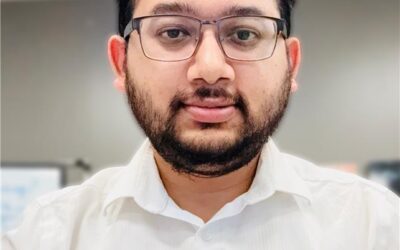
2026 Moore Fellowship Recipient: Abdulla Al Kafy
The Hogg Foundation is pleased to announce Abdulla Al Kafy, a doctoral candidate in the Department of Geography and the Environment at The University of Texas at Austin (UT Austin), as the 2026 recipient of the Moore Fellowship.