
When most people hear the word policy, they think of lawmakers, bills, or political debates, not necessarily something that affects their day-to-day life. But policy is everywhere. It shapes the jobs that we can get, the healthcare we can afford, and the communities we call home. And for young people, understanding and influencing policy isn’t just about civic engagement. It’s about shaping the future they’ll inherit.
In this episode, we’re talking with two leaders who help young Texans turn awareness into action and frustration into advocacy. Our guests are Cameron Samuels, co-founder and executive director of Students Engaged in Advancing Texas, or SEAT, an organization dedicated to increasing youth visibility in policymaking, and Ayaan Moledina, SEAT’s federal policy director.
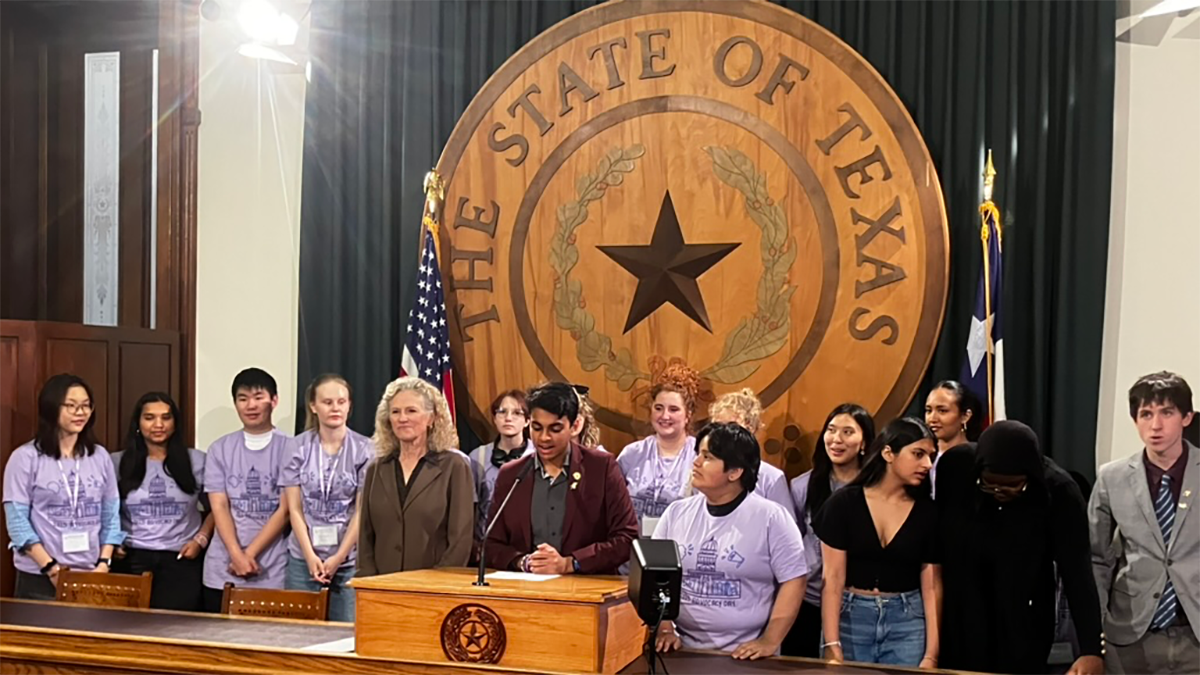
Students Claiming a “Seat” at the Table
SEAT’s members don’t see policy and legislation as an abstract idea. They recognize that it’s about their everyday lives. And they want their voices to be heard.
“SEAT is a movement of students across Texas who are impacted by policies in our schools, in our communities. These decisions are made about us, but traditionally, we’ve been excluded from the decision-making tables,” says Cameron. “We’re not only opening doors. We’re also building bridges and breaking barriers – building bridges between students and democracy, essentially.”
From Awareness to Action
Cameron and Ayaan don’t think of SEAT as an organization that “empowers” students, though. Instead, they describe it as a peer mentoring network. Their goal is to help other young people realize that they already possess power within themselves.
“Everybody has power,” says Cameron. “We just have to vocalize it, to bring it to the forefront, to look within ourselves and reflect, and then take up a microphone.”
SEAT demonstrates their mentoring approach by facilitating opportunities for students to develop leadership skills, practice coalition building, and engage with the wider community.
“There are so many ways of advocating for change. The main goal is that we at SEAT are not the only people doing that,” says Ayann. “If a student comes forward and says, ‘This is a problem we’re facing in our district’, we give them the resources they need. They already have the power inside of them. Our role is to help them realize that.”
SEAT also works to correct common misconceptions about young people’s ability to truly impact legislative and policy decisions.
“When we share the actual impact that SEAT has had – that we’ve introduced bipartisan legislation for around $990 million in funding for minority mental health that passed through the US House of Representatives – folks are inspired and understand that these are things anybody can do,” says Ayaan.
Embracing a Broad View
At the same time, Ayaan and Cameron understand that not everyone will take action in the same way.
“We don’t expect people to show up in the same way, because everyone’s leadership journey, especially as a youth, is going to be different,” says Cameron. “We have so much diversity among students. There’s not just one way to be a student.”
By embracing this broad view of policy engagement, SEAT demonstrates its understanding that students face nuanced challenges and hold varied perspectives on how best to address those challenges.
The organization also recognizes that legislators will also hold a variety of opinions and policy priorities. Ayaan and Cameron have been encouraged, however, by encountering legislators who support their involvement in the policymaking process even when they don’t always support their policy position.
One legislator supported a bill put forward by Ayaan, saying he wouldn’t have supported it if young people weren’t the ones leading it.
“He and I have become good friends now. And that’s because he supports youth voices,” says Ayaan. “We don’t agree on everything, and that’s totally fine. But we agree fundamentally that young people need to be stakeholders in the policymaking process.”
Advocacy and Mental Well-being
Even considering these moments of successful engagement, advocacy work requires a great deal of emotional resilience, say Cameron and Ayaan. They make self-care a priority and manage stress in a variety of ways, including physical activity, journaling, sleeping well, listening to music, and leaning into their faith traditions. Finding supportive community is also essential.
“No matter what we’re going through, we’re going to get through it,” says Ayaan. “And not just get through it ourselves, but we’re going to support the people around us and help them get through it. We’re going to get through it together.”
Related Content

What Comes After the Crisis: Avoiding Whiplash in Reform Efforts
Our latest podcast explores what it takes to avoid “reform whiplash”, the cycle in which systems lurch forward during crisis only to stall or regress once public attention shifts.

Policy: Telling Your Story
Explore how you can use your personal story to shape systems, influence policy, and make their communities stronger.

Three Things to Know About Meeting with Policymakers
From the Robert Lee Sutherland Seminar Policy Pre-seminar, here are three things to know about meeting with policymakers.