

This piece was written by Karen Wesley Weaver, a member of the Contributors Circle at the Hogg Foundation for Mental Health. The views expressed in this post do not represent those of the Hogg Foundation.
This year, World Mental Health Day’s theme is “It’s Time to Prioritize Mental Health at Work.”
I interviewed Ashleigh Vaughn, a friend, fellow writer, mother, and creative technologist, to bring a human story to this year’s theme.
I connected with Ashleigh through our Substack publications. My publication, “I Write Hard Things,” chronicles my lived experience with mental health, late ADHD diagnosis, and my healing journey as a mother of two autistic young adult sons and a wife of 30 years.
Ashleigh’s publication, Here Comes The Sun, is a space where she openly shares her lived experiences with bipolar disorder. Her insightful writing helps her readers better understand mental illness’s challenges.
Workplace Mental Health: Ashleigh’s Story
Thank you for your willingness to share your story. What can you tell me about the work you do?
I am a Senior IT Specialist for my county government. Most of my career has been spent in various technology consulting roles. My professional specialties are Human-Centered Design, Business Analysis, and Business Process Improvements.
Do you work at home or in an office?
I am hybrid. Two days in the office, three at home.
What impact does the ability to work at home have on your mental health?
Being able to work from home is everything. Especially on those days when my mental health may not be the greatest. I don’t have to put effort into looking presentable, make small talk with people, and be in an overstimulating environment all day. I can rest in my downtime during the day and have the flexibility to make up time after hours if need be.
What has been your experience with child care and flexibility with your employer?
I’m blessed to have an extremely flexible employer. I leave early on my office days to go pick Ava up. I have to drive in the opposite direction of home and traffic is a beast. Being able to leave early to try and beat some of it is helpful.
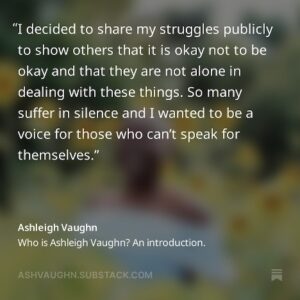
Have employers you worked for created a culture of mental health and well-being in the workplace? If so, how?
My last employer did an excellent job at doing so, but only after years of having a culture that contributed to decreased mental health. Even though they were a consulting firm, they created a division for mental health and hired actual mental health professionals to create programs and offerings to employees outside of EAP. We also had affinity groups and I was the lead at one point of the Well-being team. We were tasked with putting on wellness activities and events for our fellow project members and were given a generous budget to do so.
Have you had experiences in the workplace with stigma, discrimination, or harassment because of your mental health or that impacted your mental health?
I am fortunate enough to have not experienced any of those things directly due to my mental health. I have the privilege of being able to mask which I did for most of my life, and most people would not know that I was mentally ill had I not disclosed it. I am open and honest about having bipolar disorder not only with my direct leadership but with my peers as well and for the most part my colleagues have been understanding and supportive.
What initiatives would you like to see employers develop to create a culture of mental health at work?
I wish more companies started with better mental health care coverage in available healthcare plans and a more expansive EAP if it exists. Meeting access needs help fight half the battle because it opens up options for treatment, support, and care. What would also be nice to have is if more companies put effort into making the culture of the workplace a safe place to unmask. It starts with leadership setting the example in order to have a trickle-down effect.
Doing so will definitely have a positive impact for both employers and employees. Healthy employees are ultimately more effective and productive, which ultimately benefits all parties.
World Health Organization
According to the World Health Organization, “workplaces that promote mental health and support people with mental disorders are more likely to reduce absenteeism, increase productivity and benefit from associated economic gains.”
In my research I found that employers offer programming like sleep improvement workshops, pet therapy, and employee activities to create a sense of community, including group fitness activities, having meditation and yoga instructors come in and speakers on topics like mindfulness and burnout.
The World Health Organization hopes that by creating awareness more employers will be motivated to create a culture of mental health in the workplace to support their employees’ health and well-being.
Better mental health culture in workplaces will have a positive impact for both employers and employees. Healthy employees are ultimately more effective and productive.
Related Links
[et_pb_section bb_built="1" _builder_version="3.0.47" next_background_color="#000000"][et_pb_row _builder_version="3.0.47" background_size="initial" background_position="top_left" background_repeat="repeat"][et_pb_column type="4_4"][et_pb_text _builder_version="3.5" border_style="solid"] Communities of Care Initiative: Request for Proposals
[/et_pb_text][et_pb_text _builder_version="3.5"] This RFP closed on January 9, 2019. Grantees will be notified in May 2019 and announced shortly thereafter.
For a print-friendly version of this Request for Proposal, please click here. The information communicated in the print and web versions are identical.
The Hogg Foundation for Mental Health invites existing collaboratives in the Houston Metropolitan Statistical Area to submit a proposal for our new Communities of Care initiative, which aims to support communities in their efforts to inclusively and collaboratively cultivate resiliency, mental health, and well-being in everyday life for all members of the community, with a specific focus on children and youth of color and their families.
Depending upon the quality of proposals received, the foundation plans to award up to 12 five-year grants totaling up to $8 million. The foundation will consider proposed project budgets ranging from $500,000 to $800,000 per applicant, contingent upon demonstrated community need. Grantees will build on an existing collaborative composed of diverse partners and community members who will assess the current environment, and plan and implement strategies, services and supports to improve community resiliency, mental health and well-being, with a focus on equity.
The initiative will also include a coordinator and evaluation grant. Eligible 501(c)(3) organizations will receive support from the coordinator to strengthen or expand an existing community collaborative that builds upon an array of services and resources.
In an effort to assist applicants in developing a proposal that aligns with the foundation’s strategic direction, applicants will be offered up to 1.5 hours (including document review) of proposal development feedback and coaching provided by development consultant, Charley Scarborough (free of charge). Coaching sessions are limited to the first 100 requests. Sign up here to be added to the wait list. Read our recent blog post, Grantcoaching for Better Storytelling, to learn about his approach with applicants of a similar initiative.
Please read all information carefully before submitting a proposal. Applicants should refer to this webpage for the most current information. This document includes information on the following topics:
- Project Description
- Project Activities
- Key Dates
- Background
- Definitions and Resources
- Questions and Answers
- Review and Selection
- Eligibility and Submitting a Proposal
- Reporting Requirements
[/et_pb_text][et_pb_accordion _builder_version="3.5"][et_pb_accordion_item title="Project Activities" open="off" _builder_version="3.5" title_text_shadow_horizontal_length="0em" title_text_shadow_vertical_length="0em" title_text_shadow_blur_strength="0em" body_text_shadow_horizontal_length="0em" body_text_shadow_vertical_length="0em" body_text_shadow_blur_strength="0em" use_background_color_gradient="off" background_color_gradient_start="#2b87da" background_color_gradient_end="#29c4a9" background_color_gradient_type="linear" background_color_gradient_direction="180deg" background_color_gradient_direction_radial="center" background_color_gradient_start_position="0%" background_color_gradient_end_position="100%" background_color_gradient_overlays_image="off" parallax="off" parallax_method="on" background_size="cover" background_position="center" background_repeat="no-repeat" background_blend="normal" allow_player_pause="off" background_video_pause_outside_viewport="on" text_shadow_style="none" box_shadow_style="none" text_shadow_horizontal_length="0em" text_shadow_vertical_length="0em" text_shadow_blur_strength="0em"] The grant term is five years and is expected to begin June 2019 and end May 2024. Notice of awards will be made by May 2019. The foundation will work with each community to help identify the most pressing social determinants of mental health, and will fund the resources, services and supports necessary to strengthen community conditions that promote resiliency, mental health and well-being for children and youth of color and their families, with a focus on equity. This work will require two phases: - The first phase of this initiative will include time for planning and developing strategies for implementation, as identified by the collaborative.
- The second phase will consist of the implementation of the strategies outlined in the collaborative planning phase.
[/et_pb_accordion_item][et_pb_accordion_item title="Project Description" open="off" _builder_version="3.5" title_text_shadow_horizontal_length="0em" title_text_shadow_vertical_length="0em" title_text_shadow_blur_strength="0em" body_text_shadow_horizontal_length="0em" body_text_shadow_vertical_length="0em" body_text_shadow_blur_strength="0em" use_background_color_gradient="off" background_color_gradient_start="#2b87da" background_color_gradient_end="#29c4a9" background_color_gradient_type="linear" background_color_gradient_direction="180deg" background_color_gradient_direction_radial="center" background_color_gradient_start_position="0%" background_color_gradient_end_position="100%" background_color_gradient_overlays_image="off" parallax="off" parallax_method="on" background_size="cover" background_position="center" background_repeat="no-repeat" background_blend="normal" allow_player_pause="off" background_video_pause_outside_viewport="on" text_shadow_style="none" box_shadow_style="none" text_shadow_horizontal_length="0em" text_shadow_vertical_length="0em" text_shadow_blur_strength="0em"] The foundation recognizes that multisector, collaborative approaches are needed to address the systemic nature of the barriers to mental health in Texas. For the purpose of this request for proposal (RFP), we consider a multisector collaborative to be one that crosses different sectors (for example: health, education, law enforcement, government, business, youth, parents, the media, human services, faith-based, housing and development, arts and culture, sports, agricultural, etc.). By working together across sectors, collaborative partners have the capacity to address change at the individual, family, neighborhood, city, county and state levels. The foundation is interested in funding collaboratives that exist to create change in their community and were formed with a shared mission, goals, decision making structure and shared resources (versus those existing mainly for the purpose of information sharing or resource coordination). They must also be committed to shared learning and outcomes. Collaboratives such as these have greater power to influence the social, cultural and structural forces that typically hold complex problems in place. When submitting a proposal, applicants should aim to answer this question: How can my multisector collaborative help to inclusively and collaboratively cultivate resiliency, mental health and well-being in everyday life for children and youth of color and their families, with a focus on equity? Further, how can my collaborative leverage varying multisector efforts, including engagement from historically excluded groups, to improve the conditions that increase resiliency, mental health and well-being in my community? In addition to funding up to 12 collaboratives, the foundation will fund a separate coordinator and evaluator: - The coordinator, located in Houston Metropolitan Statistical Area, will facilitate the initiative. The coordinator will provide content experts, training, technical assistance, evaluation and learning, and will liaise with each of the grantees throughout the five-year grant term. The coordinator will support grantees via a variety of resources, including webinars, conference calls and in-person meetings.
- The external evaluation team will assess and learn about the impact of this initiative by gathering information about the planning, implementation, and results of grant-funded activities. The evaluation will begin concurrently with the grant period. Grantees are expected to cooperate fully with all evaluation and learning efforts and may also be asked to share reflections from staff, service recipients, community members and other stakeholders that illustrate the grant’s impact.
The desired outcomes of the evaluation will include data that: - Leads to a better understanding about how multisector collaboration can help more effectively address complex issues, like the impact that social determinants of mental health, and issues of diversity, equity and inclusion, have on resiliency, mental health and well-being.
- Leads to a better understanding of cultural competencies to increase awareness of historically excluded populations.
- Builds the evidence base for multisector collaborations as a promising approach to prevention and intervention for children and youth of color and their families.
- Builds community capacity to collect data and evaluate the impact of identified goals.
[/et_pb_accordion_item][et_pb_accordion_item title="Key Dates and Grant Term" open="off" _builder_version="3.5" title_text_shadow_horizontal_length="0em" title_text_shadow_vertical_length="0em" title_text_shadow_blur_strength="0em" body_text_shadow_horizontal_length="0em" body_text_shadow_vertical_length="0em" body_text_shadow_blur_strength="0em" use_background_color_gradient="off" background_color_gradient_start="#2b87da" background_color_gradient_end="#29c4a9" background_color_gradient_type="linear" background_color_gradient_direction="180deg" background_color_gradient_direction_radial="center" background_color_gradient_start_position="0%" background_color_gradient_end_position="100%" background_color_gradient_overlays_image="off" parallax="off" parallax_method="on" background_size="cover" background_position="center" background_repeat="no-repeat" background_blend="normal" allow_player_pause="off" background_video_pause_outside_viewport="on" text_shadow_style="none" box_shadow_style="none" text_shadow_horizontal_length="0em" text_shadow_vertical_length="0em" text_shadow_blur_strength="0em"] - Teleconference for Applicants (optional, highly recommended) – November 9, 2018 (10:00 – 11:30 a.m. CST) Did you miss it? Check out answers to the questions addressed during the teleconference. Please consider attending the In-Person Information Session for Applicants in Houston on November 28 to learn more (see below for a link to register).
- Proposal Development Coaching Sessions with Charley Scarborough – Available November 10, 2018 through January 4, 2019. Limited to the first 100 requests. Sign up here to be added to the wait list.
- In-person Information Session for Applicants in Houston Registration Deadline – November 26, 2018 (Noon CST) Register here.
- In-person Information Session for Applicants in Houston (optional, highly recommended) – November 28, 2018 (9:00 – 11:30 a.m. CST) Registrants will receive an email with location information.
- Fluxx Registration Deadline – Create or update your account by January 4, 2019 (11:59 p.m. CST) Fluxx is the foundation’s online grants management system where applicants submit materials.
- Proposal Submission Deadline – January 9, 2019 (11:59 p.m. CST)
- Notification of Grantee Selection – May 2019
- Grant Start Date – June 2019
- Grant End Date – May 2024 (The grant term is five years.)
[/et_pb_accordion_item][et_pb_accordion_item title="Background" open="off" _builder_version="3.5" title_text_shadow_horizontal_length="0em" title_text_shadow_vertical_length="0em" title_text_shadow_blur_strength="0em" body_text_shadow_horizontal_length="0em" body_text_shadow_vertical_length="0em" body_text_shadow_blur_strength="0em" use_background_color_gradient="off" background_color_gradient_start="#2b87da" background_color_gradient_end="#29c4a9" background_color_gradient_type="linear" background_color_gradient_direction="180deg" background_color_gradient_direction_radial="center" background_color_gradient_start_position="0%" background_color_gradient_end_position="100%" background_color_gradient_overlays_image="off" parallax="off" parallax_method="on" background_size="cover" background_position="center" background_repeat="no-repeat" background_blend="normal" allow_player_pause="off" background_video_pause_outside_viewport="on" text_shadow_style="none" box_shadow_style="none"] We believe mental health is not solely an individual responsibility, but also a product of community environments, and the potential for change is greater when we focus our efforts on diverse, historically excluded or underserved populations. By working together, we can positively influence individuals’ well-being and change the patterns of mental illness across Texas. Nationwide, there is growing momentum to address health disparities and inequities, and a number of philanthropic efforts to improve health outcomes in communities. The Communities of Care initiative is our most recent strategy to join these efforts by partnering with communities as they work with diverse and historically excluded groups, facilitate courageous conversations, and implement improvements to support resiliency, mental health and well-being. This initiative has a specific focus on children and youth of color and their families. As detailed in in the Annie E. Casey Foundation’s KIDS COUNT Data Book, this population experiences more mental health challenges as a result of greater exposure to community-level factors that threaten positive mental health. This increased exposure is a result of social, environmental and economic conditions that stem from structural differences in power and resources. The root causes of these differences include racism, sexism, classism, and other institutional and historical ways that resources, opportunity and power are distributed across groups. Well-being is defined by the Robert Wood Johnson Foundation as “the extent to which people experience happiness and satisfaction, and can apply their abilities and talents in life. Key aspects of community well-being include community health; economic resilience; educational capacity; household stability; and environmental adaptation.” They go on to explain, “It’s also critical to consider aspects of well-being across diverse populations, including those that are often marginalized.” The foundation believes the potential for change is greater when we focus our efforts on marginalized populations, and when we do so with a lens of cultural sensitivity. We also understand that the places where people live, learn, work, play and pray can have a significant impact on improving mental health. Grantmakers in Health says, “neighborhoods marked by poverty and a history of disinvestment are cut off from opportunities and resources that promote wellness. These communities face unequal health outcomes and widening disparities, especially among low-income residents, people of color, and other vulnerable populations. Community well-being is profoundly shaped by social, economic, and environmental factors such as housing, employment, and education. From sidewalks to toxic stress, evidence shows where people live has a greater impact than medical care, behavior, or genetics.” Ultimately, we aim to support communities in their efforts to identify and implement social determinant interventions that promote resiliency, mental health, and well-being for children and youth of color and their families in the Houston Metropolitan Statistical Area. [/et_pb_accordion_item][et_pb_accordion_item title="Definitions and Resources" open="off" _builder_version="3.5" title_text_shadow_horizontal_length="0em" title_text_shadow_vertical_length="0em" title_text_shadow_blur_strength="0em" body_text_shadow_horizontal_length="0em" body_text_shadow_vertical_length="0em" body_text_shadow_blur_strength="0em" use_background_color_gradient="off" background_color_gradient_start="#2b87da" background_color_gradient_end="#29c4a9" background_color_gradient_type="linear" background_color_gradient_direction="180deg" background_color_gradient_direction_radial="center" background_color_gradient_start_position="0%" background_color_gradient_end_position="100%" background_color_gradient_overlays_image="off" parallax="off" parallax_method="on" background_size="cover" background_position="center" background_repeat="no-repeat" background_blend="normal" allow_player_pause="off" background_video_pause_outside_viewport="on" text_shadow_style="none" box_shadow_style="none" text_shadow_horizontal_length="0em" text_shadow_vertical_length="0em" text_shadow_blur_strength="0em"] Community: May be defined geographically and/or by life experience. Community is both a feeling and a set of relationships among people. It is a group of people who have identified common interests, and act together to achieve them. Learn more Collaborative: “Collaboration is a process of participation through which people, groups, and organizations work together to achieve desired results. Collaborations accomplish a shared vision, achieve positive outcomes for the audiences they serve, and build an interdependent system to address issues and opportunities.” A collaborative is a group that comes together “to share vision, mission, power, resources and goals” to “jointly plan, implement and evaluate programs to achieve common goals” for collective impact. Learn more Mental Health and Well-Being: Mental health, as defined by the World Health Organization, is “a state of well-being in which the individual realizes his or her own abilities, can cope with the normal stresses of life, can work productively and fruitfully, and is able to make a contribution to his or her community.” We believe the concepts of mental health and well-being should be promoted beyond the walls of health clinics and integrated into everyday life. Community members, leaders and professionals–-from teachers and preachers, to police officers and judges-–should understand the importance of well-being and the factors that influence it, and its relationship to resilience. Learn more Social determinants of mental health: “The many interacting forces that between them shape individual and collective levels of mental health and wellbeing, and set out actions that can be pursued to promote and protect good mental health.” Learn more Social determinants of health: “Nonmedical factors such as employment, income, housing, transportation, child care, education, discrimination, and the quality of the places where people live, work, learn, and play, which influence health. They are “social” in the sense that they are shaped by social policies.” Learn more View additional definitions and resources. [/et_pb_accordion_item][et_pb_accordion_item title="Questions and Answers" open="off" _builder_version="3.5" title_text_shadow_horizontal_length="0em" title_text_shadow_vertical_length="0em" title_text_shadow_blur_strength="0em" body_text_shadow_horizontal_length="0em" body_text_shadow_vertical_length="0em" body_text_shadow_blur_strength="0em" use_background_color_gradient="off" background_color_gradient_start="#2b87da" background_color_gradient_end="#29c4a9" background_color_gradient_type="linear" background_color_gradient_direction="180deg" background_color_gradient_direction_radial="center" background_color_gradient_start_position="0%" background_color_gradient_end_position="100%" background_color_gradient_overlays_image="off" parallax="off" parallax_method="on" background_size="cover" background_position="center" background_repeat="no-repeat" background_blend="normal" allow_player_pause="off" background_video_pause_outside_viewport="on" text_shadow_style="none" box_shadow_style="none" text_shadow_horizontal_length="0em" text_shadow_vertical_length="0em" text_shadow_blur_strength="0em"] A comprehensive listing of answers to commonly asked questions can be found on the Questions and Answers webpage. The foundation does not accept phone inquiries about grant projects. Those who are interested in applying are invited to attend an optional teleconference* on November 9, 2018, and/or the optional in-person information session** in Houston on November 28, 2018, and are encouraged to check the grant opportunity webpage for the most up-to-date information. Participation is not required in either the teleconference or the in-person information session in Houston, but it is highly recommended that those considering applying attend one or the other. Similar information will be provided at each session. Questions may be submitted to hogg-grants@austin.utexas.edu (we will respond within two business days), however we ask that you review the Questions and Answers webpage before contacting us. Responses to questions addressed via email and during the teleconference that are relevant to all applicants will be posted. For technical assistance, please contact Grants Management at (512) 475-7089 or hogg-grants@austin.utexas.edu. *About the Teleconference The foundation will host a teleconference for applicants on November 9, 2018 (10:00 – 11:30 a.m. CST). Foundation staff and proposal development consultant, Charley Scarborough, will be available to answer questions. Participation is not required, but is highly recommended. Registration is required to access the teleconference. Please register here by November 9, 2018 at 8:30 a.m. CST. Registrants will receive an email with dial-in instructions. Registrants may submit questions to be addressed during the teleconference by emailing hogg-grants@austin.utexas.edu by November 8, 2018. **About the In-Person Information Session in Houston The foundation will host an in-person information session in Houston for applicants on November 28, 2018 (9:00 – 11:30 a.m. CST). Foundation staff and proposal development consultant, Charley Scarborough, will be available to answer questions. Registration is required to attend the in-person information session. Please register here by November 26, 2018 at Noon CST. Registrants will receive an email with location details. [/et_pb_accordion_item][et_pb_accordion_item title="Review and Selection" open="off" _builder_version="3.5" title_text_shadow_horizontal_length="0em" title_text_shadow_vertical_length="0em" title_text_shadow_blur_strength="0em" body_text_shadow_horizontal_length="0em" body_text_shadow_vertical_length="0em" body_text_shadow_blur_strength="0em" use_background_color_gradient="off" background_color_gradient_start="#2b87da" background_color_gradient_end="#29c4a9" background_color_gradient_type="linear" background_color_gradient_direction="180deg" background_color_gradient_direction_radial="center" background_color_gradient_start_position="0%" background_color_gradient_end_position="100%" background_color_gradient_overlays_image="off" parallax="off" parallax_method="on" background_size="cover" background_position="center" background_repeat="no-repeat" background_blend="normal" allow_player_pause="off" background_video_pause_outside_viewport="on" text_shadow_style="none" box_shadow_style="none" text_shadow_horizontal_length="0em" text_shadow_vertical_length="0em" text_shadow_blur_strength="0em"] Foundation staff will use a rating instrument to evaluate the merits of the proposals and select grant recipients. The foundation also may use external reviewers to evaluate proposals. While all proposal sections will be considered in the review process, the proposal narrative section will be weighted most heavily. Factors used to evaluate proposals for this RFP include: - The applicant demonstrates interest in and/or experience with mental health.
- The applicant’s mission and vision are aligned with the goals of their proposal.
- Population demographics and needs are aligned with priorities of the initiative.
- The goals of the proposal align with the main purpose of the initiative.
- The proposed activities are well defined and likely to achieve goals.
- The applicant demonstrates the capacity to complete the proposed activities.
- The proposed expenses are justified.
[/et_pb_accordion_item][et_pb_accordion_item title="Eligibility and Submitting a Proposal" open="off" _builder_version="3.5" title_text_shadow_horizontal_length="0em" title_text_shadow_vertical_length="0em" title_text_shadow_blur_strength="0em" body_text_shadow_horizontal_length="0em" body_text_shadow_vertical_length="0em" body_text_shadow_blur_strength="0em" use_background_color_gradient="off" background_color_gradient_start="#2b87da" background_color_gradient_end="#29c4a9" background_color_gradient_type="linear" background_color_gradient_direction="180deg" background_color_gradient_direction_radial="center" background_color_gradient_start_position="0%" background_color_gradient_end_position="100%" background_color_gradient_overlays_image="off" parallax="off" parallax_method="on" background_size="cover" background_position="center" background_repeat="no-repeat" background_blend="normal" allow_player_pause="off" background_video_pause_outside_viewport="on" text_shadow_style="none" box_shadow_style="none" text_shadow_horizontal_length="0em" text_shadow_vertical_length="0em" text_shadow_blur_strength="0em"] Who Should Apply
The lead applicant must be a 501(c)(3) nonprofit organization and a member of an existing multisector collaborative in the Houston Metropolitan Statistical Area. The foundation will not fund an organization to subcontract with another entity to carry out the program. Grants will only be awarded to organizations that are directly responsible for implementing the project. How to Submit a Proposal
Proposals must be submitted via Fluxx, the foundation’s online grant management system, by January 9, 2019 at 11:59 p.m. CST. Please be aware that the foundation is closed for winter break December 24, 2018 through January 1, 2019. If you need assistance during that time, contact us at hogg-grants@austin.utexas.edu and rest assured that someone will be in touch upon our return. Fluxx registration is required for organizations without an existing account by January 4, 2019 at 11:59 p.m. CST. To create a new account, visit https://hogg.fluxx.io and click “Create an account now” at the bottom right of the Fluxx welcome page (you will need your organization’s federal tax identification number). If you have a username, but have forgotten the password, click “Reset or create password” on the left side of the Fluxx welcome page. Once application materials are submitted through Fluxx, you will receive an automated email confirmation, or an alert if materials failed to upload. If your application is incomplete, you are expected to complete submission immediately. Need help? For step-by-step instructions, check out the How to Apply for a Grant in Fluxx Guide. For technical assistance with the online submission process, contact Grants Management at (512) 475-7089 or hogg-grants@austin.utexas.edu. The proposal must include the following elements: 1. Summary This element is provided in an electronic form in Fluxx. The information entered into this form will serve as the proposal cover letter. 2. Narrative This element is provided in an electronic form in Fluxx. The following information must be included in the narrative in detail: Proposal Goal - Applicants should describe the main purpose of their proposal, including: a. goals of the proposed project; b. strategies or methods that will be used to achieve the goals; c. describe the proposed outcomes you plan to achieve by the end of the planning phase.
Applicant Background, Relevant Work and Ability to Complete Project Goals - Applicants should describe the vision and mission of their multisector collaborative and how they align with the goals of the project, including: a. interest in or experience with resiliency, mental health and well-being, with a focus on equity; b. the history of relevant programs accomplishments; c. relevant community member involvement; d. history of population served, and the impact on the community; e. history of engagement of children and youth of color and their families or historically excluded groups.
- Applicants must describe organizational capacity to manage a grant award of the amount requested, or partner with a fiscal agent to manage the budgetary responsibilities and requirements. The fiscal agent must be a part of the collaborative.
- Clearly define the role of each collaborative partner.
- Describe the governance structure and how the collaborative will be convened.
- If applicable, describe current relevant work, including start and end dates.
- As part of your proposal and planning phase, are you referencing a community strengths/needs assessment in relation to well-being conducted in your community within the last 3 years? Yes or no question. If you’re unsure, choose no. If no, move to the next section – Community Needs and Demographics. a. If YES, answer the following questions. Note: If your community strengths/needs assessment included a mental health or substance use component, your answers should reflect this. The foundation plans to use this information to shape technical assistance offerings and will not use this information in evaluating your proposal.
- How were people in historically excluded groups included in the assessment?
- What community conditions were found that contribute to or detract from your community’s well-being?
- What conclusions were drawn from the assessment about opportunities and challenges in your community?
- What recommendations came out of the assessment to improve community well-being?
- What, if any, actions were taken as a result of the assessment?
- If applicable, describe any local- and/or state-level policy development or advocacy activities.
Community Needs and Demographics - Applicants should provide a description of the community and its needs, including: a. The population who will benefit from this grant, including race, ethnicity and socioeconomic status; geographic area (e.g., city, zip codes, neighborhoods, rural/urban, etc.); b. Needs, challenges and opportunities to be addressed in this project; c. Data sources for relevant facts and information that support the needs and demographics.
- Identify the potential social determinants and/or community conditions this collaborative aims to address.
- Please identify historically excluded groups/individuals from the community that will be engaged in the collaborative. a. Please specify how you plan to engage historically excluded groups/individuals in the collaborative.
- Please share what types of technical assistance would be most valuable to building the capacity of your collaboration during the course of this grant please. The foundation plans to use this information to shape technical assistance offerings and will not use this information in evaluating your proposal.
Proposal Description and Activities - Applicants should describe how they intend to accomplish the goals of the proposal, including: a) learning activities, meetings, trainings, etc. (type and frequency) to be conducted during the grant term; b) how the activities will advance the goals and strategies.
- How long of a planning phase do you expect to need prior to submitting an implementation plan?
- Describe how you intend to create a safe space for challenging conversations in which your community can address issues of oppression (such as sexism, racism, genderism, etc.), foster an engaging process, and ensure all voices are valued, respected and included.
- Describe what level of prevention and intervention your proposal aims to address.
- Describe any complementary efforts, including other multisector collaboratives in your community that could potentially enhance or align with the proposed work.
- Provide a description of the proposed planning process.
- Describe communications activities such as news releases, brochures, websites, social media, and videos, and an explanation of how each communications activity or tool will support and promote the initiative, and how it will be implemented.
3. Staff This element is provided in the Proposed Staff section under the Key Project Staff and must be completed and saved in the electronic form in Fluxx. List only the employees, potential contractors and consultants who will be paid by the grant by clicking the green “plus” button on the right-hand side of the screen. Resumes and/or job descriptions will be uploaded into the Documents section. Multisector Collaborative Member Roster This element is linked in Fluxx to an Excel document template in the Application Documents section under Required Application Documents. Applicants will complete, save, and upload the document in the Application Documents section. 4. Taxonomic Data This element is provided through a drop-down menu that helps the foundation understand who and where we fund in Texas. Applicant should select counties and specific population groups that will benefit from their proposal. We collect this information to share with the public and other foundations to further our transparency, help others build on our achievements, and learn from our challenges. 5. Timeline This element is linked in Fluxx to an Excel document template in the Application Documents section under the Required Application Documents. Applicants will complete, save, and upload the document in Fluxx. Applicants will: - Identify major proposal milestones and due dates.
- Identify who will be responsible for carrying out proposal tasks.
All applicants may find it helpful to include a planning period at the beginning of the grant term. 6. Budget Applicants should propose use of funds that best support the long-term success of a multisector collaborative approach to addressing the issues identified. Given the substantial scope of work, proposals should include a set of activities and milestones related to planning and a tentative set of activities and milestones related to implementation. This element is linked in Fluxx to an Excel document template in the Application Documents section under Required Application Documents. Applicants will complete, save, and upload the document in the Application Documents section in Fluxx. Instructions for completing this document are included in the first tab of the budget template provided in Fluxx. 7. Letter of Approval to Submit This element will be provided by the applicant’s authorized agency representative. Upload the document into in the Application Documents section under the Required Application Documents section in Fluxx. Applicants who are eligible 501(c)(3) organizations must submit a signed letter on letterhead from the authorized agency representative approving the submission of the proposal. 8. Letters of Support This element will be provided by the supporting and/or partner organizations. The applicant will upload the documents into in the Application Documents section under Required Application Documents in Fluxx. All multisector collaborative partners must submit signed letters of support. The letters must be on the partner organization’s letterhead and must be signed by the authorized agency representative, such as the executive director, president or CEO. 9. Fiscal Documents This element will be provided by the applicant’s fiscal office and uploaded into the Fiscal Documents section in Fluxx. Submit the following fiscal documents to assist the foundation in assessing the organization’s fiscal soundness: - IRS letter of determination of 501(c)(3) status or tax-exempt status
- Most recent IRS Form 990
- Church Verification Form
- Current operating budget
- Statement of activities (income statements) from the past year
- Statement of financial position (balance sheets) from the past year
The foundation may request additional fiscal documents when reviewing proposals. [/et_pb_accordion_item][et_pb_accordion_item title="Reporting Requirements" open="on" _builder_version="3.5" title_text_shadow_horizontal_length="0em" title_text_shadow_vertical_length="0em" title_text_shadow_blur_strength="0em" body_text_shadow_horizontal_length="0em" body_text_shadow_vertical_length="0em" body_text_shadow_blur_strength="0em"] The reporting requirements and due dates will be clearly stated in the statement of agreement between the grantee and the foundation. The grantee will be required to submit annual narrative and fiscal reports describing the implementation of the grant during the designated grant period. [/et_pb_accordion_item][/et_pb_accordion][/et_pb_column][/et_pb_row][/et_pb_section][et_pb_section bb_built="1" _builder_version="3.0.47" prev_background_color="#000000" next_background_color="#f5f5f5"][et_pb_row _builder_version="3.0.47" background_size="initial" background_position="top_left" background_repeat="repeat" custom_padding="26.0312px|0px|0|0px|false|false"][et_pb_column type="4_4"][et_pb_text admin_label="Title" _builder_version="3.19.5" module_alignment="left" border_style="solid" divienhancer_set="none" divienhancer_hover_effect="none" divienhancer_sticky_module="none" divienhancer_modal_overlay="#333333" divienhancer_module_menu_button_background="#333333" divienhancer_module_menu_button_color="#ffffff"] Communities of Care
[/et_pb_text][et_pb_text admin_label="Description" _builder_version="3.19.5" module_alignment="left" border_style="solid" divienhancer_set="none" divienhancer_hover_effect="none" divienhancer_sticky_module="none" divienhancer_modal_overlay="#333333" divienhancer_module_menu_button_background="#333333" divienhancer_module_menu_button_color="#ffffff"] The Hogg Foundation seeks to address a lack of understanding of how communities support resilience and mental health, the significant inequities that exist in Texas, the community conditions that contribute to mental health disparities, and how people come together to create and implement community-driven solutions.
Ten organizations were awarded $800,000 each to build on an existing community collaborative. The collaboratives consist of key stakeholders from across sectors who are working together to plan and implement activities that address a wide range of community needs. An eleventh organization, Prevention Institute, was awarded to provide coordination for the entire initiative.
[/et_pb_text][/et_pb_column][/et_pb_row][/et_pb_section][et_pb_section bb_built="1" background_color="#f5f5f5" _builder_version="3.5" prev_background_color="#ffffff"][et_pb_row _builder_version="3.5"][et_pb_column type="4_4"][et_pb_text admin_label="Grantees" _builder_version="3.19.5" module_alignment="left" border_style="solid" divienhancer_set="none" divienhancer_hover_effect="none" divienhancer_sticky_module="none" divienhancer_modal_overlay="#333333" divienhancer_module_menu_button_background="#333333" divienhancer_module_menu_button_color="#ffffff"] Current Grantees
- AccessHealth
- Asian American Health Coalition of the Greater Houston Area
- CHRISTUS Foundation for HealthCare
- Family Service Center of Galveston County
- First3Years
- Houston Parks Board
- Light and Salt Association
- Mental Health America of Greater Houston
- My Connect Community
- Neighborhood Recovery Community Development Corporation
- Prevention Institute
-
Check out spotlights on the work happening in each county (Bastrop, Brooks, Morris, Nacogdoches and Victoria) and listen to an episode of the foundation’s Into the Fold podcast with the initiative coordinator, Alliance for Greater Works.
[/et_pb_text][/et_pb_column][/et_pb_row][/et_pb_section]
The Hogg Foundation seeks to address a lack of understanding of how communities support resilience and mental health, the significant inequities that exist in Texas, the community conditions that contribute to mental health disparities, and how people come together to create and implement community-driven solutions.
Ten organizations were awarded $800,000 each to build on an existing community collaborative. The collaboratives consist of key stakeholders from across sectors who are working together to plan and implement activities that address a wide range of community needs. An eleventh organization, Prevention Institute, was awarded to provide coordination for the entire initiative.
Current Grantees
- AccessHealth
- Asian American Health Coalition of the Greater Houston Area
- CHRISTUS Foundation for HealthCare
- Family Service Center of Galveston County
- First3Years
- Houston Parks Board
- Light and Salt Association
- Mental Health America of Greater Houston
- My Connect Community
- Neighborhood Recovery Community Development Corporation
- Prevention Institute
Check out spotlights on the work happening in each county (Bastrop, Brooks, Morris, Nacogdoches and Victoria) and listen to an episode of the foundation’s Into the Fold podcast with the initiative coordinator, Alliance for Greater Works.
Communities of Care Initiative: Request for Proposals This RFP closed on January 9, 2019. Grantees will be notified in May 2019 and announced shortly thereafter. For a print-friendly version of this Request for Proposal, please click here. The information communicated...
[et_pb_section bb_built="1" _builder_version="3.0.47" next_background_color="#000000"][et_pb_row _builder_version="3.0.47" background_size="initial" background_position="top_left" background_repeat="repeat"][et_pb_column type="4_4"][et_pb_text _builder_version="3.5" border_style="solid"] Communities of Care Initiative: Request for Proposals
[/et_pb_text][et_pb_text _builder_version="3.5"] This RFP closed on January 9, 2019. Grantees will be notified in May 2019 and announced shortly thereafter.
For a print-friendly version of this Request for Proposal, please click here. The information communicated in the print and web versions are identical.
The Hogg Foundation for Mental Health invites existing collaboratives in the Houston Metropolitan Statistical Area to submit a proposal for our new Communities of Care initiative, which aims to support communities in their efforts to inclusively and collaboratively cultivate resiliency, mental health, and well-being in everyday life for all members of the community, with a specific focus on children and youth of color and their families.
Depending upon the quality of proposals received, the foundation plans to award up to 12 five-year grants totaling up to $8 million. The foundation will consider proposed project budgets ranging from $500,000 to $800,000 per applicant, contingent upon demonstrated community need. Grantees will build on an existing collaborative composed of diverse partners and community members who will assess the current environment, and plan and implement strategies, services and supports to improve community resiliency, mental health and well-being, with a focus on equity.
The initiative will also include a coordinator and evaluation grant. Eligible 501(c)(3) organizations will receive support from the coordinator to strengthen or expand an existing community collaborative that builds upon an array of services and resources.
In an effort to assist applicants in developing a proposal that aligns with the foundation’s strategic direction, applicants will be offered up to 1.5 hours (including document review) of proposal development feedback and coaching provided by development consultant, Charley Scarborough (free of charge). Coaching sessions are limited to the first 100 requests. Sign up here to be added to the wait list. Read our recent blog post, Grantcoaching for Better Storytelling, to learn about his approach with applicants of a similar initiative.
Please read all information carefully before submitting a proposal. Applicants should refer to this webpage for the most current information. This document includes information on the following topics:
- Project Description
- Project Activities
- Key Dates
- Background
- Definitions and Resources
- Questions and Answers
- Review and Selection
- Eligibility and Submitting a Proposal
- Reporting Requirements
[/et_pb_text][et_pb_accordion _builder_version="3.5"][et_pb_accordion_item title="Project Activities" open="off" _builder_version="3.5" title_text_shadow_horizontal_length="0em" title_text_shadow_vertical_length="0em" title_text_shadow_blur_strength="0em" body_text_shadow_horizontal_length="0em" body_text_shadow_vertical_length="0em" body_text_shadow_blur_strength="0em" use_background_color_gradient="off" background_color_gradient_start="#2b87da" background_color_gradient_end="#29c4a9" background_color_gradient_type="linear" background_color_gradient_direction="180deg" background_color_gradient_direction_radial="center" background_color_gradient_start_position="0%" background_color_gradient_end_position="100%" background_color_gradient_overlays_image="off" parallax="off" parallax_method="on" background_size="cover" background_position="center" background_repeat="no-repeat" background_blend="normal" allow_player_pause="off" background_video_pause_outside_viewport="on" text_shadow_style="none" box_shadow_style="none" text_shadow_horizontal_length="0em" text_shadow_vertical_length="0em" text_shadow_blur_strength="0em"] The grant term is five years and is expected to begin June 2019 and end May 2024. Notice of awards will be made by May 2019. The foundation will work with each community to help identify the most pressing social determinants of mental health, and will fund the resources, services and supports necessary to strengthen community conditions that promote resiliency, mental health and well-being for children and youth of color and their families, with a focus on equity. This work will require two phases: - The first phase of this initiative will include time for planning and developing strategies for implementation, as identified by the collaborative.
- The second phase will consist of the implementation of the strategies outlined in the collaborative planning phase.
[/et_pb_accordion_item][et_pb_accordion_item title="Project Description" open="off" _builder_version="3.5" title_text_shadow_horizontal_length="0em" title_text_shadow_vertical_length="0em" title_text_shadow_blur_strength="0em" body_text_shadow_horizontal_length="0em" body_text_shadow_vertical_length="0em" body_text_shadow_blur_strength="0em" use_background_color_gradient="off" background_color_gradient_start="#2b87da" background_color_gradient_end="#29c4a9" background_color_gradient_type="linear" background_color_gradient_direction="180deg" background_color_gradient_direction_radial="center" background_color_gradient_start_position="0%" background_color_gradient_end_position="100%" background_color_gradient_overlays_image="off" parallax="off" parallax_method="on" background_size="cover" background_position="center" background_repeat="no-repeat" background_blend="normal" allow_player_pause="off" background_video_pause_outside_viewport="on" text_shadow_style="none" box_shadow_style="none" text_shadow_horizontal_length="0em" text_shadow_vertical_length="0em" text_shadow_blur_strength="0em"] The foundation recognizes that multisector, collaborative approaches are needed to address the systemic nature of the barriers to mental health in Texas. For the purpose of this request for proposal (RFP), we consider a multisector collaborative to be one that crosses different sectors (for example: health, education, law enforcement, government, business, youth, parents, the media, human services, faith-based, housing and development, arts and culture, sports, agricultural, etc.). By working together across sectors, collaborative partners have the capacity to address change at the individual, family, neighborhood, city, county and state levels. The foundation is interested in funding collaboratives that exist to create change in their community and were formed with a shared mission, goals, decision making structure and shared resources (versus those existing mainly for the purpose of information sharing or resource coordination). They must also be committed to shared learning and outcomes. Collaboratives such as these have greater power to influence the social, cultural and structural forces that typically hold complex problems in place. When submitting a proposal, applicants should aim to answer this question: How can my multisector collaborative help to inclusively and collaboratively cultivate resiliency, mental health and well-being in everyday life for children and youth of color and their families, with a focus on equity? Further, how can my collaborative leverage varying multisector efforts, including engagement from historically excluded groups, to improve the conditions that increase resiliency, mental health and well-being in my community? In addition to funding up to 12 collaboratives, the foundation will fund a separate coordinator and evaluator: - The coordinator, located in Houston Metropolitan Statistical Area, will facilitate the initiative. The coordinator will provide content experts, training, technical assistance, evaluation and learning, and will liaise with each of the grantees throughout the five-year grant term. The coordinator will support grantees via a variety of resources, including webinars, conference calls and in-person meetings.
- The external evaluation team will assess and learn about the impact of this initiative by gathering information about the planning, implementation, and results of grant-funded activities. The evaluation will begin concurrently with the grant period. Grantees are expected to cooperate fully with all evaluation and learning efforts and may also be asked to share reflections from staff, service recipients, community members and other stakeholders that illustrate the grant’s impact.
The desired outcomes of the evaluation will include data that: - Leads to a better understanding about how multisector collaboration can help more effectively address complex issues, like the impact that social determinants of mental health, and issues of diversity, equity and inclusion, have on resiliency, mental health and well-being.
- Leads to a better understanding of cultural competencies to increase awareness of historically excluded populations.
- Builds the evidence base for multisector collaborations as a promising approach to prevention and intervention for children and youth of color and their families.
- Builds community capacity to collect data and evaluate the impact of identified goals.
[/et_pb_accordion_item][et_pb_accordion_item title="Key Dates and Grant Term" open="off" _builder_version="3.5" title_text_shadow_horizontal_length="0em" title_text_shadow_vertical_length="0em" title_text_shadow_blur_strength="0em" body_text_shadow_horizontal_length="0em" body_text_shadow_vertical_length="0em" body_text_shadow_blur_strength="0em" use_background_color_gradient="off" background_color_gradient_start="#2b87da" background_color_gradient_end="#29c4a9" background_color_gradient_type="linear" background_color_gradient_direction="180deg" background_color_gradient_direction_radial="center" background_color_gradient_start_position="0%" background_color_gradient_end_position="100%" background_color_gradient_overlays_image="off" parallax="off" parallax_method="on" background_size="cover" background_position="center" background_repeat="no-repeat" background_blend="normal" allow_player_pause="off" background_video_pause_outside_viewport="on" text_shadow_style="none" box_shadow_style="none" text_shadow_horizontal_length="0em" text_shadow_vertical_length="0em" text_shadow_blur_strength="0em"] - Teleconference for Applicants (optional, highly recommended) – November 9, 2018 (10:00 – 11:30 a.m. CST) Did you miss it? Check out answers to the questions addressed during the teleconference. Please consider attending the In-Person Information Session for Applicants in Houston on November 28 to learn more (see below for a link to register).
- Proposal Development Coaching Sessions with Charley Scarborough – Available November 10, 2018 through January 4, 2019. Limited to the first 100 requests. Sign up here to be added to the wait list.
- In-person Information Session for Applicants in Houston Registration Deadline – November 26, 2018 (Noon CST) Register here.
- In-person Information Session for Applicants in Houston (optional, highly recommended) – November 28, 2018 (9:00 – 11:30 a.m. CST) Registrants will receive an email with location information.
- Fluxx Registration Deadline – Create or update your account by January 4, 2019 (11:59 p.m. CST) Fluxx is the foundation’s online grants management system where applicants submit materials.
- Proposal Submission Deadline – January 9, 2019 (11:59 p.m. CST)
- Notification of Grantee Selection – May 2019
- Grant Start Date – June 2019
- Grant End Date – May 2024 (The grant term is five years.)
[/et_pb_accordion_item][et_pb_accordion_item title="Background" open="off" _builder_version="3.5" title_text_shadow_horizontal_length="0em" title_text_shadow_vertical_length="0em" title_text_shadow_blur_strength="0em" body_text_shadow_horizontal_length="0em" body_text_shadow_vertical_length="0em" body_text_shadow_blur_strength="0em" use_background_color_gradient="off" background_color_gradient_start="#2b87da" background_color_gradient_end="#29c4a9" background_color_gradient_type="linear" background_color_gradient_direction="180deg" background_color_gradient_direction_radial="center" background_color_gradient_start_position="0%" background_color_gradient_end_position="100%" background_color_gradient_overlays_image="off" parallax="off" parallax_method="on" background_size="cover" background_position="center" background_repeat="no-repeat" background_blend="normal" allow_player_pause="off" background_video_pause_outside_viewport="on" text_shadow_style="none" box_shadow_style="none"] We believe mental health is not solely an individual responsibility, but also a product of community environments, and the potential for change is greater when we focus our efforts on diverse, historically excluded or underserved populations. By working together, we can positively influence individuals’ well-being and change the patterns of mental illness across Texas. Nationwide, there is growing momentum to address health disparities and inequities, and a number of philanthropic efforts to improve health outcomes in communities. The Communities of Care initiative is our most recent strategy to join these efforts by partnering with communities as they work with diverse and historically excluded groups, facilitate courageous conversations, and implement improvements to support resiliency, mental health and well-being. This initiative has a specific focus on children and youth of color and their families. As detailed in in the Annie E. Casey Foundation’s KIDS COUNT Data Book, this population experiences more mental health challenges as a result of greater exposure to community-level factors that threaten positive mental health. This increased exposure is a result of social, environmental and economic conditions that stem from structural differences in power and resources. The root causes of these differences include racism, sexism, classism, and other institutional and historical ways that resources, opportunity and power are distributed across groups. Well-being is defined by the Robert Wood Johnson Foundation as “the extent to which people experience happiness and satisfaction, and can apply their abilities and talents in life. Key aspects of community well-being include community health; economic resilience; educational capacity; household stability; and environmental adaptation.” They go on to explain, “It’s also critical to consider aspects of well-being across diverse populations, including those that are often marginalized.” The foundation believes the potential for change is greater when we focus our efforts on marginalized populations, and when we do so with a lens of cultural sensitivity. We also understand that the places where people live, learn, work, play and pray can have a significant impact on improving mental health. Grantmakers in Health says, “neighborhoods marked by poverty and a history of disinvestment are cut off from opportunities and resources that promote wellness. These communities face unequal health outcomes and widening disparities, especially among low-income residents, people of color, and other vulnerable populations. Community well-being is profoundly shaped by social, economic, and environmental factors such as housing, employment, and education. From sidewalks to toxic stress, evidence shows where people live has a greater impact than medical care, behavior, or genetics.” Ultimately, we aim to support communities in their efforts to identify and implement social determinant interventions that promote resiliency, mental health, and well-being for children and youth of color and their families in the Houston Metropolitan Statistical Area. [/et_pb_accordion_item][et_pb_accordion_item title="Definitions and Resources" open="off" _builder_version="3.5" title_text_shadow_horizontal_length="0em" title_text_shadow_vertical_length="0em" title_text_shadow_blur_strength="0em" body_text_shadow_horizontal_length="0em" body_text_shadow_vertical_length="0em" body_text_shadow_blur_strength="0em" use_background_color_gradient="off" background_color_gradient_start="#2b87da" background_color_gradient_end="#29c4a9" background_color_gradient_type="linear" background_color_gradient_direction="180deg" background_color_gradient_direction_radial="center" background_color_gradient_start_position="0%" background_color_gradient_end_position="100%" background_color_gradient_overlays_image="off" parallax="off" parallax_method="on" background_size="cover" background_position="center" background_repeat="no-repeat" background_blend="normal" allow_player_pause="off" background_video_pause_outside_viewport="on" text_shadow_style="none" box_shadow_style="none" text_shadow_horizontal_length="0em" text_shadow_vertical_length="0em" text_shadow_blur_strength="0em"] Community: May be defined geographically and/or by life experience. Community is both a feeling and a set of relationships among people. It is a group of people who have identified common interests, and act together to achieve them. Learn more Collaborative: “Collaboration is a process of participation through which people, groups, and organizations work together to achieve desired results. Collaborations accomplish a shared vision, achieve positive outcomes for the audiences they serve, and build an interdependent system to address issues and opportunities.” A collaborative is a group that comes together “to share vision, mission, power, resources and goals” to “jointly plan, implement and evaluate programs to achieve common goals” for collective impact. Learn more Mental Health and Well-Being: Mental health, as defined by the World Health Organization, is “a state of well-being in which the individual realizes his or her own abilities, can cope with the normal stresses of life, can work productively and fruitfully, and is able to make a contribution to his or her community.” We believe the concepts of mental health and well-being should be promoted beyond the walls of health clinics and integrated into everyday life. Community members, leaders and professionals–-from teachers and preachers, to police officers and judges-–should understand the importance of well-being and the factors that influence it, and its relationship to resilience. Learn more Social determinants of mental health: “The many interacting forces that between them shape individual and collective levels of mental health and wellbeing, and set out actions that can be pursued to promote and protect good mental health.” Learn more Social determinants of health: “Nonmedical factors such as employment, income, housing, transportation, child care, education, discrimination, and the quality of the places where people live, work, learn, and play, which influence health. They are “social” in the sense that they are shaped by social policies.” Learn more View additional definitions and resources. [/et_pb_accordion_item][et_pb_accordion_item title="Questions and Answers" open="off" _builder_version="3.5" title_text_shadow_horizontal_length="0em" title_text_shadow_vertical_length="0em" title_text_shadow_blur_strength="0em" body_text_shadow_horizontal_length="0em" body_text_shadow_vertical_length="0em" body_text_shadow_blur_strength="0em" use_background_color_gradient="off" background_color_gradient_start="#2b87da" background_color_gradient_end="#29c4a9" background_color_gradient_type="linear" background_color_gradient_direction="180deg" background_color_gradient_direction_radial="center" background_color_gradient_start_position="0%" background_color_gradient_end_position="100%" background_color_gradient_overlays_image="off" parallax="off" parallax_method="on" background_size="cover" background_position="center" background_repeat="no-repeat" background_blend="normal" allow_player_pause="off" background_video_pause_outside_viewport="on" text_shadow_style="none" box_shadow_style="none" text_shadow_horizontal_length="0em" text_shadow_vertical_length="0em" text_shadow_blur_strength="0em"] A comprehensive listing of answers to commonly asked questions can be found on the Questions and Answers webpage. The foundation does not accept phone inquiries about grant projects. Those who are interested in applying are invited to attend an optional teleconference* on November 9, 2018, and/or the optional in-person information session** in Houston on November 28, 2018, and are encouraged to check the grant opportunity webpage for the most up-to-date information. Participation is not required in either the teleconference or the in-person information session in Houston, but it is highly recommended that those considering applying attend one or the other. Similar information will be provided at each session. Questions may be submitted to hogg-grants@austin.utexas.edu (we will respond within two business days), however we ask that you review the Questions and Answers webpage before contacting us. Responses to questions addressed via email and during the teleconference that are relevant to all applicants will be posted. For technical assistance, please contact Grants Management at (512) 475-7089 or hogg-grants@austin.utexas.edu. *About the Teleconference The foundation will host a teleconference for applicants on November 9, 2018 (10:00 – 11:30 a.m. CST). Foundation staff and proposal development consultant, Charley Scarborough, will be available to answer questions. Participation is not required, but is highly recommended. Registration is required to access the teleconference. Please register here by November 9, 2018 at 8:30 a.m. CST. Registrants will receive an email with dial-in instructions. Registrants may submit questions to be addressed during the teleconference by emailing hogg-grants@austin.utexas.edu by November 8, 2018. **About the In-Person Information Session in Houston The foundation will host an in-person information session in Houston for applicants on November 28, 2018 (9:00 – 11:30 a.m. CST). Foundation staff and proposal development consultant, Charley Scarborough, will be available to answer questions. Registration is required to attend the in-person information session. Please register here by November 26, 2018 at Noon CST. Registrants will receive an email with location details. [/et_pb_accordion_item][et_pb_accordion_item title="Review and Selection" open="off" _builder_version="3.5" title_text_shadow_horizontal_length="0em" title_text_shadow_vertical_length="0em" title_text_shadow_blur_strength="0em" body_text_shadow_horizontal_length="0em" body_text_shadow_vertical_length="0em" body_text_shadow_blur_strength="0em" use_background_color_gradient="off" background_color_gradient_start="#2b87da" background_color_gradient_end="#29c4a9" background_color_gradient_type="linear" background_color_gradient_direction="180deg" background_color_gradient_direction_radial="center" background_color_gradient_start_position="0%" background_color_gradient_end_position="100%" background_color_gradient_overlays_image="off" parallax="off" parallax_method="on" background_size="cover" background_position="center" background_repeat="no-repeat" background_blend="normal" allow_player_pause="off" background_video_pause_outside_viewport="on" text_shadow_style="none" box_shadow_style="none" text_shadow_horizontal_length="0em" text_shadow_vertical_length="0em" text_shadow_blur_strength="0em"] Foundation staff will use a rating instrument to evaluate the merits of the proposals and select grant recipients. The foundation also may use external reviewers to evaluate proposals. While all proposal sections will be considered in the review process, the proposal narrative section will be weighted most heavily. Factors used to evaluate proposals for this RFP include: - The applicant demonstrates interest in and/or experience with mental health.
- The applicant’s mission and vision are aligned with the goals of their proposal.
- Population demographics and needs are aligned with priorities of the initiative.
- The goals of the proposal align with the main purpose of the initiative.
- The proposed activities are well defined and likely to achieve goals.
- The applicant demonstrates the capacity to complete the proposed activities.
- The proposed expenses are justified.
[/et_pb_accordion_item][et_pb_accordion_item title="Eligibility and Submitting a Proposal" open="off" _builder_version="3.5" title_text_shadow_horizontal_length="0em" title_text_shadow_vertical_length="0em" title_text_shadow_blur_strength="0em" body_text_shadow_horizontal_length="0em" body_text_shadow_vertical_length="0em" body_text_shadow_blur_strength="0em" use_background_color_gradient="off" background_color_gradient_start="#2b87da" background_color_gradient_end="#29c4a9" background_color_gradient_type="linear" background_color_gradient_direction="180deg" background_color_gradient_direction_radial="center" background_color_gradient_start_position="0%" background_color_gradient_end_position="100%" background_color_gradient_overlays_image="off" parallax="off" parallax_method="on" background_size="cover" background_position="center" background_repeat="no-repeat" background_blend="normal" allow_player_pause="off" background_video_pause_outside_viewport="on" text_shadow_style="none" box_shadow_style="none" text_shadow_horizontal_length="0em" text_shadow_vertical_length="0em" text_shadow_blur_strength="0em"] Who Should Apply
The lead applicant must be a 501(c)(3) nonprofit organization and a member of an existing multisector collaborative in the Houston Metropolitan Statistical Area. The foundation will not fund an organization to subcontract with another entity to carry out the program. Grants will only be awarded to organizations that are directly responsible for implementing the project. How to Submit a Proposal
Proposals must be submitted via Fluxx, the foundation’s online grant management system, by January 9, 2019 at 11:59 p.m. CST. Please be aware that the foundation is closed for winter break December 24, 2018 through January 1, 2019. If you need assistance during that time, contact us at hogg-grants@austin.utexas.edu and rest assured that someone will be in touch upon our return. Fluxx registration is required for organizations without an existing account by January 4, 2019 at 11:59 p.m. CST. To create a new account, visit https://hogg.fluxx.io and click “Create an account now” at the bottom right of the Fluxx welcome page (you will need your organization’s federal tax identification number). If you have a username, but have forgotten the password, click “Reset or create password” on the left side of the Fluxx welcome page. Once application materials are submitted through Fluxx, you will receive an automated email confirmation, or an alert if materials failed to upload. If your application is incomplete, you are expected to complete submission immediately. Need help? For step-by-step instructions, check out the How to Apply for a Grant in Fluxx Guide. For technical assistance with the online submission process, contact Grants Management at (512) 475-7089 or hogg-grants@austin.utexas.edu. The proposal must include the following elements: 1. Summary This element is provided in an electronic form in Fluxx. The information entered into this form will serve as the proposal cover letter. 2. Narrative This element is provided in an electronic form in Fluxx. The following information must be included in the narrative in detail: Proposal Goal - Applicants should describe the main purpose of their proposal, including: a. goals of the proposed project; b. strategies or methods that will be used to achieve the goals; c. describe the proposed outcomes you plan to achieve by the end of the planning phase.
Applicant Background, Relevant Work and Ability to Complete Project Goals - Applicants should describe the vision and mission of their multisector collaborative and how they align with the goals of the project, including: a. interest in or experience with resiliency, mental health and well-being, with a focus on equity; b. the history of relevant programs accomplishments; c. relevant community member involvement; d. history of population served, and the impact on the community; e. history of engagement of children and youth of color and their families or historically excluded groups.
- Applicants must describe organizational capacity to manage a grant award of the amount requested, or partner with a fiscal agent to manage the budgetary responsibilities and requirements. The fiscal agent must be a part of the collaborative.
- Clearly define the role of each collaborative partner.
- Describe the governance structure and how the collaborative will be convened.
- If applicable, describe current relevant work, including start and end dates.
- As part of your proposal and planning phase, are you referencing a community strengths/needs assessment in relation to well-being conducted in your community within the last 3 years? Yes or no question. If you’re unsure, choose no. If no, move to the next section – Community Needs and Demographics. a. If YES, answer the following questions. Note: If your community strengths/needs assessment included a mental health or substance use component, your answers should reflect this. The foundation plans to use this information to shape technical assistance offerings and will not use this information in evaluating your proposal.
- How were people in historically excluded groups included in the assessment?
- What community conditions were found that contribute to or detract from your community’s well-being?
- What conclusions were drawn from the assessment about opportunities and challenges in your community?
- What recommendations came out of the assessment to improve community well-being?
- What, if any, actions were taken as a result of the assessment?
- If applicable, describe any local- and/or state-level policy development or advocacy activities.
Community Needs and Demographics - Applicants should provide a description of the community and its needs, including: a. The population who will benefit from this grant, including race, ethnicity and socioeconomic status; geographic area (e.g., city, zip codes, neighborhoods, rural/urban, etc.); b. Needs, challenges and opportunities to be addressed in this project; c. Data sources for relevant facts and information that support the needs and demographics.
- Identify the potential social determinants and/or community conditions this collaborative aims to address.
- Please identify historically excluded groups/individuals from the community that will be engaged in the collaborative. a. Please specify how you plan to engage historically excluded groups/individuals in the collaborative.
- Please share what types of technical assistance would be most valuable to building the capacity of your collaboration during the course of this grant please. The foundation plans to use this information to shape technical assistance offerings and will not use this information in evaluating your proposal.
Proposal Description and Activities - Applicants should describe how they intend to accomplish the goals of the proposal, including: a) learning activities, meetings, trainings, etc. (type and frequency) to be conducted during the grant term; b) how the activities will advance the goals and strategies.
- How long of a planning phase do you expect to need prior to submitting an implementation plan?
- Describe how you intend to create a safe space for challenging conversations in which your community can address issues of oppression (such as sexism, racism, genderism, etc.), foster an engaging process, and ensure all voices are valued, respected and included.
- Describe what level of prevention and intervention your proposal aims to address.
- Describe any complementary efforts, including other multisector collaboratives in your community that could potentially enhance or align with the proposed work.
- Provide a description of the proposed planning process.
- Describe communications activities such as news releases, brochures, websites, social media, and videos, and an explanation of how each communications activity or tool will support and promote the initiative, and how it will be implemented.
3. Staff This element is provided in the Proposed Staff section under the Key Project Staff and must be completed and saved in the electronic form in Fluxx. List only the employees, potential contractors and consultants who will be paid by the grant by clicking the green “plus” button on the right-hand side of the screen. Resumes and/or job descriptions will be uploaded into the Documents section. Multisector Collaborative Member Roster This element is linked in Fluxx to an Excel document template in the Application Documents section under Required Application Documents. Applicants will complete, save, and upload the document in the Application Documents section. 4. Taxonomic Data This element is provided through a drop-down menu that helps the foundation understand who and where we fund in Texas. Applicant should select counties and specific population groups that will benefit from their proposal. We collect this information to share with the public and other foundations to further our transparency, help others build on our achievements, and learn from our challenges. 5. Timeline This element is linked in Fluxx to an Excel document template in the Application Documents section under the Required Application Documents. Applicants will complete, save, and upload the document in Fluxx. Applicants will: - Identify major proposal milestones and due dates.
- Identify who will be responsible for carrying out proposal tasks.
All applicants may find it helpful to include a planning period at the beginning of the grant term. 6. Budget Applicants should propose use of funds that best support the long-term success of a multisector collaborative approach to addressing the issues identified. Given the substantial scope of work, proposals should include a set of activities and milestones related to planning and a tentative set of activities and milestones related to implementation. This element is linked in Fluxx to an Excel document template in the Application Documents section under Required Application Documents. Applicants will complete, save, and upload the document in the Application Documents section in Fluxx. Instructions for completing this document are included in the first tab of the budget template provided in Fluxx. 7. Letter of Approval to Submit This element will be provided by the applicant’s authorized agency representative. Upload the document into in the Application Documents section under the Required Application Documents section in Fluxx. Applicants who are eligible 501(c)(3) organizations must submit a signed letter on letterhead from the authorized agency representative approving the submission of the proposal. 8. Letters of Support This element will be provided by the supporting and/or partner organizations. The applicant will upload the documents into in the Application Documents section under Required Application Documents in Fluxx. All multisector collaborative partners must submit signed letters of support. The letters must be on the partner organization’s letterhead and must be signed by the authorized agency representative, such as the executive director, president or CEO. 9. Fiscal Documents This element will be provided by the applicant’s fiscal office and uploaded into the Fiscal Documents section in Fluxx. Submit the following fiscal documents to assist the foundation in assessing the organization’s fiscal soundness: - IRS letter of determination of 501(c)(3) status or tax-exempt status
- Most recent IRS Form 990
- Church Verification Form
- Current operating budget
- Statement of activities (income statements) from the past year
- Statement of financial position (balance sheets) from the past year
The foundation may request additional fiscal documents when reviewing proposals. [/et_pb_accordion_item][et_pb_accordion_item title="Reporting Requirements" open="on" _builder_version="3.5" title_text_shadow_horizontal_length="0em" title_text_shadow_vertical_length="0em" title_text_shadow_blur_strength="0em" body_text_shadow_horizontal_length="0em" body_text_shadow_vertical_length="0em" body_text_shadow_blur_strength="0em"] The reporting requirements and due dates will be clearly stated in the statement of agreement between the grantee and the foundation. The grantee will be required to submit annual narrative and fiscal reports describing the implementation of the grant during the designated grant period. [/et_pb_accordion_item][/et_pb_accordion][/et_pb_column][/et_pb_row][/et_pb_section][et_pb_section bb_built="1" _builder_version="3.0.47" prev_background_color="#000000" next_background_color="#f5f5f5"][et_pb_row _builder_version="3.0.47" background_size="initial" background_position="top_left" background_repeat="repeat" custom_padding="26.0312px|0px|0|0px|false|false"][et_pb_column type="4_4"][et_pb_text admin_label="Title" _builder_version="3.19.5" module_alignment="left" border_style="solid" divienhancer_set="none" divienhancer_hover_effect="none" divienhancer_sticky_module="none" divienhancer_modal_overlay="#333333" divienhancer_module_menu_button_background="#333333" divienhancer_module_menu_button_color="#ffffff"] Communities of Care
[/et_pb_text][et_pb_text admin_label="Description" _builder_version="3.19.5" module_alignment="left" border_style="solid" divienhancer_set="none" divienhancer_hover_effect="none" divienhancer_sticky_module="none" divienhancer_modal_overlay="#333333" divienhancer_module_menu_button_background="#333333" divienhancer_module_menu_button_color="#ffffff"] The Hogg Foundation seeks to address a lack of understanding of how communities support resilience and mental health, the significant inequities that exist in Texas, the community conditions that contribute to mental health disparities, and how people come together to create and implement community-driven solutions.
Ten organizations were awarded $800,000 each to build on an existing community collaborative. The collaboratives consist of key stakeholders from across sectors who are working together to plan and implement activities that address a wide range of community needs. An eleventh organization, Prevention Institute, was awarded to provide coordination for the entire initiative.
[/et_pb_text][/et_pb_column][/et_pb_row][/et_pb_section][et_pb_section bb_built="1" background_color="#f5f5f5" _builder_version="3.5" prev_background_color="#ffffff"][et_pb_row _builder_version="3.5"][et_pb_column type="4_4"][et_pb_text admin_label="Grantees" _builder_version="3.19.5" module_alignment="left" border_style="solid" divienhancer_set="none" divienhancer_hover_effect="none" divienhancer_sticky_module="none" divienhancer_modal_overlay="#333333" divienhancer_module_menu_button_background="#333333" divienhancer_module_menu_button_color="#ffffff"] Current Grantees
- AccessHealth
- Asian American Health Coalition of the Greater Houston Area
- CHRISTUS Foundation for HealthCare
- Family Service Center of Galveston County
- First3Years
- Houston Parks Board
- Light and Salt Association
- Mental Health America of Greater Houston
- My Connect Community
- Neighborhood Recovery Community Development Corporation
- Prevention Institute
-
Check out spotlights on the work happening in each county (Bastrop, Brooks, Morris, Nacogdoches and Victoria) and listen to an episode of the foundation’s Into the Fold podcast with the initiative coordinator, Alliance for Greater Works.
[/et_pb_text][/et_pb_column][/et_pb_row][/et_pb_section]
The Hogg Foundation seeks to address a lack of understanding of how communities support resilience and mental health, the significant inequities that exist in Texas, the community conditions that contribute to mental health disparities, and how people come together to create and implement community-driven solutions.
Ten organizations were awarded $800,000 each to build on an existing community collaborative. The collaboratives consist of key stakeholders from across sectors who are working together to plan and implement activities that address a wide range of community needs. An eleventh organization, Prevention Institute, was awarded to provide coordination for the entire initiative.
Current Grantees
- AccessHealth
- Asian American Health Coalition of the Greater Houston Area
- CHRISTUS Foundation for HealthCare
- Family Service Center of Galveston County
- First3Years
- Houston Parks Board
- Light and Salt Association
- Mental Health America of Greater Houston
- My Connect Community
- Neighborhood Recovery Community Development Corporation
- Prevention Institute
Check out spotlights on the work happening in each county (Bastrop, Brooks, Morris, Nacogdoches and Victoria) and listen to an episode of the foundation’s Into the Fold podcast with the initiative coordinator, Alliance for Greater Works.
Communities of Care Initiative: Request for Proposals This RFP closed on January 9, 2019. Grantees will be notified in May 2019 and announced shortly thereafter. For a print-friendly version of this Request for Proposal, please click here. The information communicated...
Communities of Care Initiative: Request for Proposals
Communities of Care Initiative: Request for Proposals This RFP closed on January 9, 2019. Grantees will be notified in May 2019 and announced shortly thereafter. For a print-friendly version of this Request for Proposal, please click here. The information communicated...
Hogg Foundation Awards $11.5 Million to Address Well-being in Houston Area
The $11.5 million initiative supports collaborative approaches to mental health and well-being in the Houston Metropolitan Statistical Area.
Hogg Foundation Awards $11.5 Million to Address Well-being in Houston Area
The $11.5 million initiative supports collaborative approaches to mental health and well-being in the Houston Metropolitan Statistical Area.