
Growth. Growth is good. Growth is vital. Personal/individual growth, community growth, non-profit growth, private sector growth. All contribute to an ecosystem that has the potential to thrive and flourish. It can also be constricted. Sometimes by choice, sometimes by circumstances, sometimes being unaware. It happens.
November 20 is National Rural Health Day. I’ve been involved in rural mental health for many years, and in the course of this work I have seen this interplay of flourishing and constriction play out numerous times. One thing I’ve learned: constriction is not an impediment but should be viewed as a growth opportunity.
Becoming Root-Bound
We see growth potential in all industry sectors. We see this at home, in our neighborhood, in our community, in schools, places we work, places we play, places we pray. In non-profit organizations, government, and in private sector. It’s important to be attuned to the growth potential opportunities as at times a person may not realize they are constricted or root-bound.
I’ll be the first to say I’m not a gardener. Just ask my office colleagues. Actually, I’d bet money on a plant’s demise under my care. But this visual sticks with me and is one most, if not all, can relate to.
Plants, at times, become root-bound, which constricts their growth and ability to thrive. Without intervention, they will cease to grow and subsequently die. It happens to me all the time.
Think about that young plant in a small pot. With all the right elements (sun, water, nurturing), it has the potential to grow and thrive. But there comes a point when it ceases to grow or stagnates. Why? It becomes constricted or root-bound.
 Becoming root-bound or ceasing to grow happens with individuals, with neighborhoods, with communities, with organizations, and in the private sector.
Sometimes individuals can self-reflect and say to themselves, I need a new challenge in my life for me to continue to grow….This can mean lifting oneself out of the pot, untangling, then replanting in a larger pot (job change). Sometimes the individual asks for additional job duties or tasks to continue to grow.
Sometimes an astute manager identifies this root-boundness in an employee, which can facilitate the conversation. You are doing well in your role. I see greater potential in you. I’d like to increase your role, give you some added duties/responsibilities because I believe you will be successful taking these on and grow and expand in your role. To give you the best potential for success, I am going to ensure you get the extra support by providing: ____________ (mentorship; a seasoned co-worker for shadowing/coaching; online and/or in-person training; etc.).
Growth Mindset
There is a concept embraced by the business or private sector that also applies to individuals and within organizations, non-profits, governmental agencies, and educational settings. It is referred to as the growth mindset versus a fixed mindset.
Carol Dweck is a highly respected professor of psychology at Stanford University and has authored many widely acclaimed books, including Mindset: The New Psychology of Success. She differentiates between the two mindsets:
A growth mindset is “the belief that an individual’s most basic abilities and skills can be developed through dedication and hard work—brains and talent are just the starting point.”
A fixed mindset is “the belief that an individual’s basic abilities and skills, their intelligence, and their talents, are just fixed traits.
Clearly, a fixed mindset limits personal and professional growth.
To foster the development and success of a growth mindset, there needs to be support that positions the person for success.
Developing Growth Mindset
Catherine Cote describes ways that a person or organization can foster a growth mindset:
- Embrace Challenges
View challenges as opportunities rather than obstacles. View each opportunity as a chance to learn and grow, not an impediment to success. You can begin by taking on small challenges and gradually taking on bigger ones as you build confidence and the new skill set.
2. Celebrate Effort, Not Just Success
Shift one’s focus from only praising outcomes to recognizing and rewarding effort – as an employee (self-reflection), among your colleagues, and as a manager. Understand that consistent effort over time is the key to mastery. Celebrate small victories and incremental progress. These are vital toward achieving larger goals for personal and professional development.
- Cultivate Curiosity
We can always be more intentional about staying curious and always be willing to learn, whether reading about new sector or industry trends, attending meetings, training, or networking meet ups, or asking colleagues for their insights. Allow yourself to be vulnerable as outside insights or perspectives can help you continually grow, adapt and hedge, the potential to thrive.
- Prioritize Learning Over Approval
We should see ourselves as continuous learners. Think about the opportunity to learn something in every situation rather than seeking others’ approval or getting the task/job done. Shifting one’s perspective can reduce fear of judgment and provides greater flexibility and freedom to pursue more ambitious, exciting, and innovative projects.
- Surround Yourself with Growth-Minded People
For success, it’s critical to have a strong and diverse network of peers, mentors, and collaborators with growth mindsets. They can serve as models for you to emulate. Take what you see as desirable or an attribute you don’t possess and include it in your daily routine. Engaging with people who can help you see other pathways or challenges is not a bad thing. It can motivate your development and accelerate your growth.
A growth mindset is the belief that skills and abilities can be improved and that developing these is the purpose of your actions. Growth mindset is a frame of mind. Leaders can positively assist people in adopting growth mindsets by fostering a culture encouraging specific behaviors and practices. Individuals and organizations can have growth mindsets.
What to do when we see ourselves becoming stagnant in our growth? Re-pot ourselves into a larger pot which will enable us to grow, or expand our knowledge (roots). To be attuned to your own growth process, look for growth opportunities for those around you. At home, in your community, with your co-workers.
Struggle and failure are learning opportunities. That’s where growth occurs. Embrace the “fail forward” concept. Thomas Edison and the lightbulb, Louis Pasteur and the polio vaccine, Johannes Gutenberg and the printing press, Henry Ford and the automation of the auto industry, and many recent examples in the high-tech industry. Lots of failures to get it right. The key is learning and persistence. They didn’t become discouraged and give up. They persisted and eventually became successful.
We can apply many of these concepts, principles, and tools in our everyday lives. To grow and thrive. We can create a growth mindset and environment at home, in our neighborhoods, in our communities, and in our work environments.
A key theme of National Rural Health Day is honoring the heroic efforts of rural health care providers, organizations, and communities. Their daily practice finding growth potential in the root-bound is something that philanthropy can learn volumes from. Lest we forget: people are our greatest resource and our greatest asset.

Community-Based Solutions: Grassroots Mental Health Innovations That Work
When it comes to supporting rural communities, especially around mental health, success often starts not with answers, but with questions—and a deep commitment to listening.

Children of Change: Supporting Youth Mental Health in an Uncertain World
We take a deep dive into youth mental health, the pressures on families and educators, and the community-driven solutions that offer hope.

Transforming Lives at the Border: How a Rural Library in San Elizario is Changing the Game
An example of how one rural library is making a tangible difference in a small rural border community by prioritizing people and harnessing existing community assets.

My Conversation with Steve Appleton on Global Mental Health, Part 1
By exploring important issues, we provide valuable insights into how we can improve mental health systems around the world.
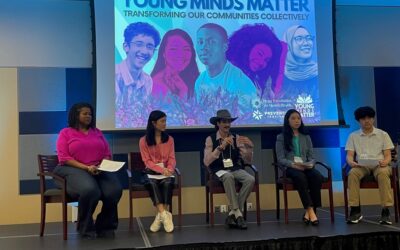
Young Minds Matter: Not Just a Day but a Movement
The insight, vulnerability, and stories shared at the 2023 Young Minds Matter Conference ignited conversations that will echo beyond that one day.

For Austin State Hospital, Building a Newer, Bigger Facility is Not Enough
The long-overdue redesign of the Austin State Hospital is nearing completion.