
Throughout our podcast season, our guests have explored what it takes to build bridges, rebuild trust, strengthen partnerships, and rethink policy. We’ve discussed new ideas about how to make mental health systems more responsive and more equitable. What have we actually learned and what should we do with those lessons? Today we’re joined by three people who have spent their careers asking those very questions about institutional learning.
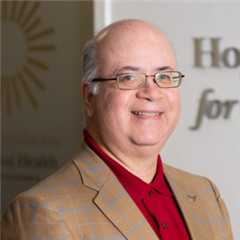

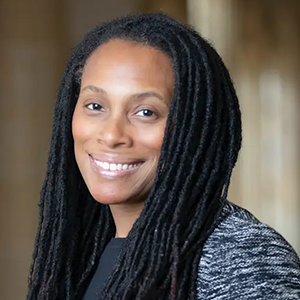
In this episode, we hear from Dr. Octavio N. Martinez, Jr., senior associate vice president and executive director of the Hogg Foundation for Mental Health at the University of Texas at Austin and professor in the Department of Psychiatry at Dell Medical School; Dr. Marcella Nunez-Smith, C.N.H. Long Professor of Medicine and Public Health at the Yale School of Medicine, who also recently chaired the White House Covid-19 Health Equity Task Force and served as senior advisor to the White House Covid-19 Response Team; and Dr. Angelique Harris, sociologist, educator, member of the Hogg Foundation’s National Advisory Council, and professor at the Boston University Chobanian and Avedisian School of Medicine.
Recognizing Community Voice
As a statewide funder working to support mental health and well-being, the Hogg Foundation has long been making an impact across Texas.
“What we’ve learned along the way is the importance of community,” says Dr. Martinez. “The community voice is so integral. I think it has helped to elevate our work by recognizing that.”
But the foundation didn’t always work in this collaborative way. Like many funders, for decades the foundation dictated how communities should use grant funds.
“As time has gone by, we’ve come to recognize that community members are the real subject matter experts on what their community needs. Recognizing the power of lived experience has led us to understand why the community voice must be front and center. It must be integrated into the 21st century model of mental health care,” says Dr. Martinez. “Innovation comes into play in working respectfully with communities to honor their experience and to help them be part of the process of actually improving mental health and well-being.”
Dr. Harris and Dr. Nunez-Smith also believe community voice is essential.
“Communities are all unique. They have their own concerns, their own issues, their own stories,” says Dr. Harris. “It’s not a ‘one size fits all’ approach to supporting them.”
“Shifting power is so important,” says Dr. Nunez-Smith. “Knowledge is situated in the community. It’s hyperlocal and requires a hyperlocal response.”
Restoring Public Trust
Working to restore public trust in science, public health, and researchers also offers opportunities for institutional learning and innovating. As former chair of the White House Health Equity Task Force on COVID-19, Dr. Nunez-Smith understands the complexity of this issue.
“Where does distrust come from and how do institutions take the lead in being trustworthy?” says Dr. Nunez-Smith. “How do we define and hold ourselves responsible to community accountability measures? Because when we start losing that connection to the person next door, we’re all in trouble.”
Dr. Martinez also served as a member of the COVID-19 task force. That process is an example that institutions can learn from, he says.
“The members of the task force represented diverse communities from across this entire nation,” says Dr. Martinez. “The process involved reaching out and meeting with community after community. It really put the community voice front and center.”
Indeed, equitable partnerships that recognize both community expertise and institutional expertise are powerful, says Dr. Nunez Smith.
“We need both. The conversation has to be about the ‘we’ in all of this, because communities for too long have been dismissed or had their ideas diminished. Institutions need to see how we can be responsive and how we can be held accountable. When you say ‘community’ you need to talk about power dynamics and creating equitable partnerships to get the work done.”
Envisioning Change
Drs. Nunez Smith, Martinez, and Harris envision how institutional learning could better address mental health and well-being at the community level.
“If I could undo something, it would be the silos that we begin the conversations in — as if mental health is separate and apart from physical health. That has been at the root of so much that’s problematic about reimbursement and payment and access and normalizing seeking care,” says Dr. Nunez Smith. “Thinking about resource allocation and distribution is going to be key in moving forward.”
Dr. Harris emphasizes the need to address the costs, billing, and reimbursement aspects of mental health care addressed more equitably.
For Dr. Martinez, preventive care and a public health approach are also especially needed.
“Let’s not wait to be responsive, let’s be proactive,” he says. “A public health approach to mental health must be equity driven. All communities must be included, be respected.”
Learning Forward
Incorporating lessons learned and changes proposed for how to make mental health systems more responsive and more equitable will mean taking action.
“It’s not just about learning,” says Dr. Harris. “It’s about enacting some sort of change as you learn. It’s more dynamic.”
In agreement that learning needs to be more action-oriented, Dr. Nunez-Smith, also believes “learning forward is about being curious in a new way, looking for answers and solutions in places we haven’t before.”
Dr. Martinez thinks about learning forward in similar terms.
“It’s a continuous improvement. The beautiful thing is that it’s about harnessing our creativity to address the future and keep going forward. In that sense, I think it could be so powerful.”
Related Content

Designing Belonging: Third Spaces as Mental Health Infrastructure
The Austin Public Library system provides some of the most visible and accessible third space systems in the city. It is a network of spaces that serve people across ages, backgrounds, and life experiences.
Educators As Architects of Change
Beth Hines takes a whole system approach to student mental health through a program at Arp Elementary School.

What Comes After the Crisis: Avoiding Whiplash in Reform Efforts
Our latest podcast explores what it takes to avoid “reform whiplash”, the cycle in which systems lurch forward during crisis only to stall or regress once public attention shifts.