
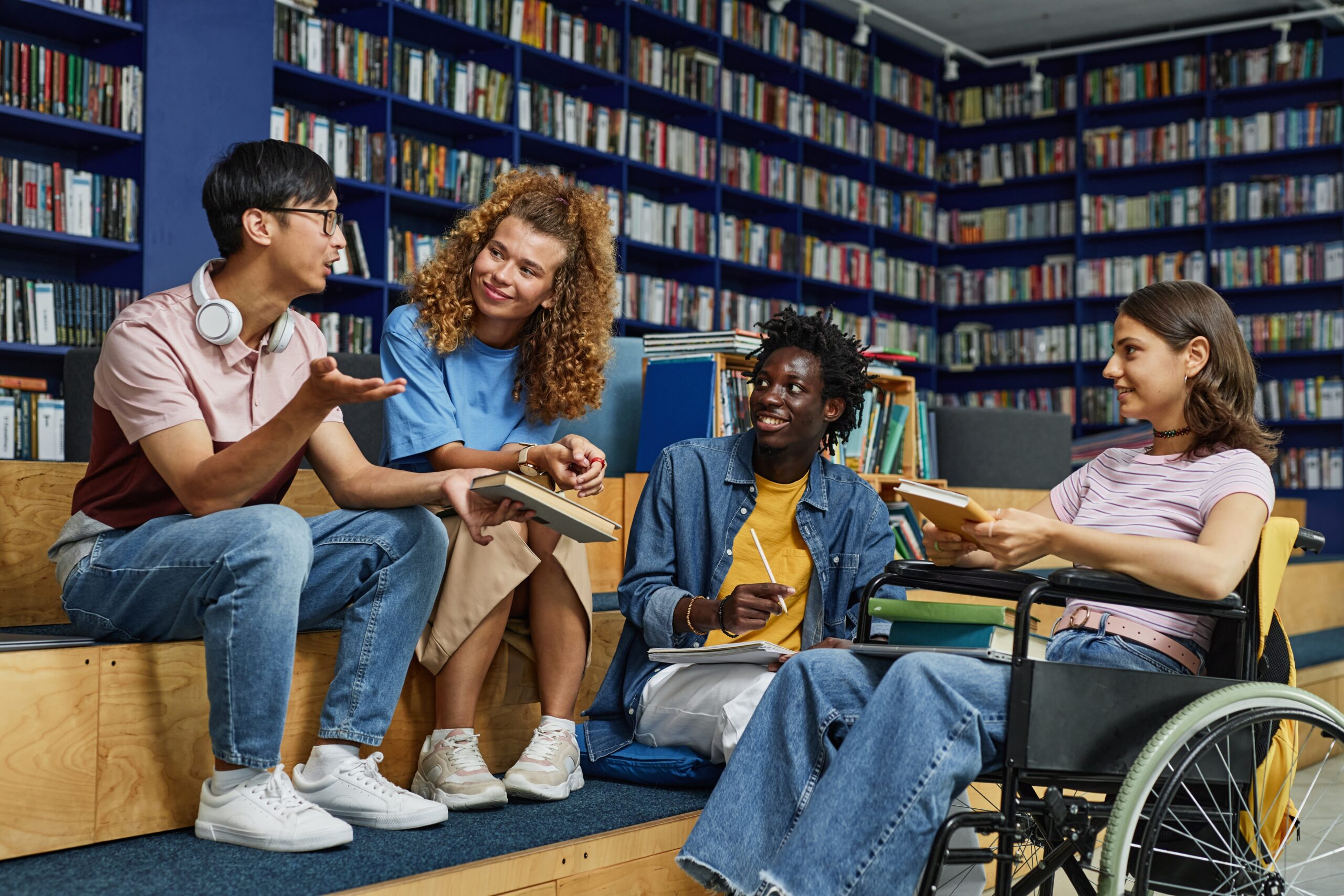
Sociologists define “third spaces” as places we go where belonging takes shape, places that have a real impact on how we experience the world and each other. In a time when loneliness and disconnection are rising, these spaces may be more essential than ever — not just as amenities, but as part of our mental health infrastructure.
In this episode of Into the Fold, we hear from Simone Till, disability access specialist at Galt, and Hannah Terrell, director of the Austin Public Library.
Quality of Interaction
“When we talk about the places we spend our lives, we usually think of two primary domains. We think of our home as the ‘first space’ and then the ‘second space’, which is work,” says Simone. “But oftentimes something that’s overlooked is the ‘third space’.”
The significance of third spaces is essentially the quality of the interaction that takes place there, she says.
“Sociologist Ray Oldenburg defines third spaces as open and inviting, comfortable and informal. You feel like you belong there,” says Simone. “They’re convenient, so you can visit often. They’re unpretentious, so you’re not feeling like you have to fit in. You can just walk in. There are regulars and conversation is the main activity. You get to know people and build communities.”
Hannah adds that third spaces are also voluntary. They’re free, accessible, open, and you choose to go there.
Austin Public Library
The Austin Public Library system provides some of the most visible and accessible third space systems in the city. It is a network of spaces that serve people across ages, backgrounds, and life experiences.
Celebrating its centennial this year, the central branch of the Austin Public Library was recently described by Time Magazine as “a palace for the people.”
“Spaces like our public library institutions, and how society uses them, have evolved over time,” says Hannah. “We have not always been there, where we’ve been considered a third space. But it is where we are now.”
Designing Intentionally
Indeed, designing spaces that intentionally reflect the community they are meant to serve with a “mirror effect” is essential for creating a space that feels welcoming, safe, and inclusive, says Simone.
“The mirror effect is basically when you walk into a space and you feel represented,” she says. “You feel that this is a place where you can connect with regulars and get to know people. It’s not just a place where people open up their laptops, they don’t talk to each other, and then they’re gone.”
Understanding the true purpose of a space is also essential.
“The first step is the ‘why’,” says Simone. “Why are you building it? Are you representing the community? And what does the community need?”
Designing at the Library
Austin’s libraries aim to create this sense of belonging through intentional design of both its physical spaces and its public programming.
One physical consideration, for example, is the choice to position librarians’ desks near the buildings’ entrances so that librarians are understood as welcoming and accessible.
“We don’t want you to have to go all the way to the back of the building before you’re actually greeted by someone,” says Hannah.
Intentional physical design also includes accessibility accommodations for visitors who experience spaces in different ways and informational signage printed in multiple languages for non-English speaking visitors. Even designing for sound is intentional.
“In the past, visitors weren’t always welcome to speak in raised voices. But now our spaces are designed and built with different acoustical considerations to have music in programming or to account for when people’s voice pitches go higher or lower,” says Hannah. “The libraries are designed to have quiet spaces for study as well as spaces for community gatherings. All of that is very important in creating a sense of belonging so that people don’t have to feel like they have to ‘shhhhh’.”
Programming at the Library
Hosting public programs and events that are reflective of the communities served by branch libraries is also an important part of creating spaces that nurture a sense of belonging, says Hannah. “About four years ago, we started creating signature programming for different libraries based on existing themes and needs.”
Equally important, public programming invites community building.
“Public programs and events invite you to speak to others,” says Hannah. “Being in the audience of an author’s talk, or being in a program that invites questions, or being in places where you can hear other people’s questions — many times those events give you insight into other people’s viewpoints. That broadens your awareness by listening to other people’s questions and responses.”
People may visit the library just to read the paper in the morning or to come in and be recognized by staff who know your name, says Hannah.
“But those few minutes of coming into the library and being seen can be a game changer,” she says. “When we’re in the hustle and bustle of life, maybe we don’t always think about it, but being able to walk into a public space and have somebody recognize you, acknowledge you– it all invites community and chips away at isolation.
Related Content
Learning Forward: What the Future Demands from Researchers and Institutions
What have institutions and researchers learned and what should we do with those lessons? Our guests have spent their careers asking those very questions.
Educators As Architects of Change
Beth Hines takes a whole system approach to student mental health through a program at Arp Elementary School.
What Comes After the Crisis: Avoiding Whiplash in Reform Efforts
Our latest podcast explores what it takes to avoid “reform whiplash”, the cycle in which systems lurch forward during crisis only to stall or regress once public attention shifts.