
Reflections on the Global Leadership Exchange 2026
Recently, I had the opportunity to attend the 2026 Global Leadership Exchange conference (GLE) in Canada. My experience began in Halifax at a small group workshop that focused on fostering well-being in rural and remote communities. I then traveled to Ottawa for the broader conference that focused on moving from ideas to action. The GLE connects leaders in mental health, disability, substance use, and addiction. It creates space for sharing ideas, knowledge, and best practices to help spread innovation and change lives.

I’ve attended many conferences over the years, but this one felt different. It was energizing, thoughtful, and deeply affirming of the kind of work we care about at the Hogg Foundation: work that centers relationships, community wisdom, and lived experience while also asking hard questions about systems, accountability, and what it really takes to create change.
Why It Matters
I want to share my reflections on the experience because I think there is real value and inspiration here, not just in what I learned, but in why my presence and participation mattered. GLE 2026 brought together hundreds of leaders from across mental health, disability, substance use, addiction, and community well-being work.
The official theme, Ideas to Action: Inspiring Leaders to Mobilize Collective Solutions, was not just conference language. It showed up in the structure, dialogue, and the repeated challenge to move beyond inspiration and into implementation. For me, that made this experience especially meaningful. It offered a chance to bring the Hogg Foundation’s work, values, and perspective to an international space while also learning from people who are wrestling with many of the same issues in very different contexts.
Beginning in Halifax: Rural and Remote Communities at the Center
My week began in Halifax with a small group workshop titled Well-Being in Rural and Remote Communities. This meeting was small and intimate enough to allow for the kind of conversation that can be difficult to achieve in larger conference settings.
With representation from Australia, Canada, Ireland, the United Kingdom, and the United States, we quickly found common ground. Despite differences in geography, governance, history, funding, and service delivery systems, the core challenges were deeply familiar: access barriers to mental health and substance use services that go far beyond distance, workforce shortages, fragmented systems, stigma, digital inequities, payors, and the constant tension between formal services and the informal networks that people actually rely on.
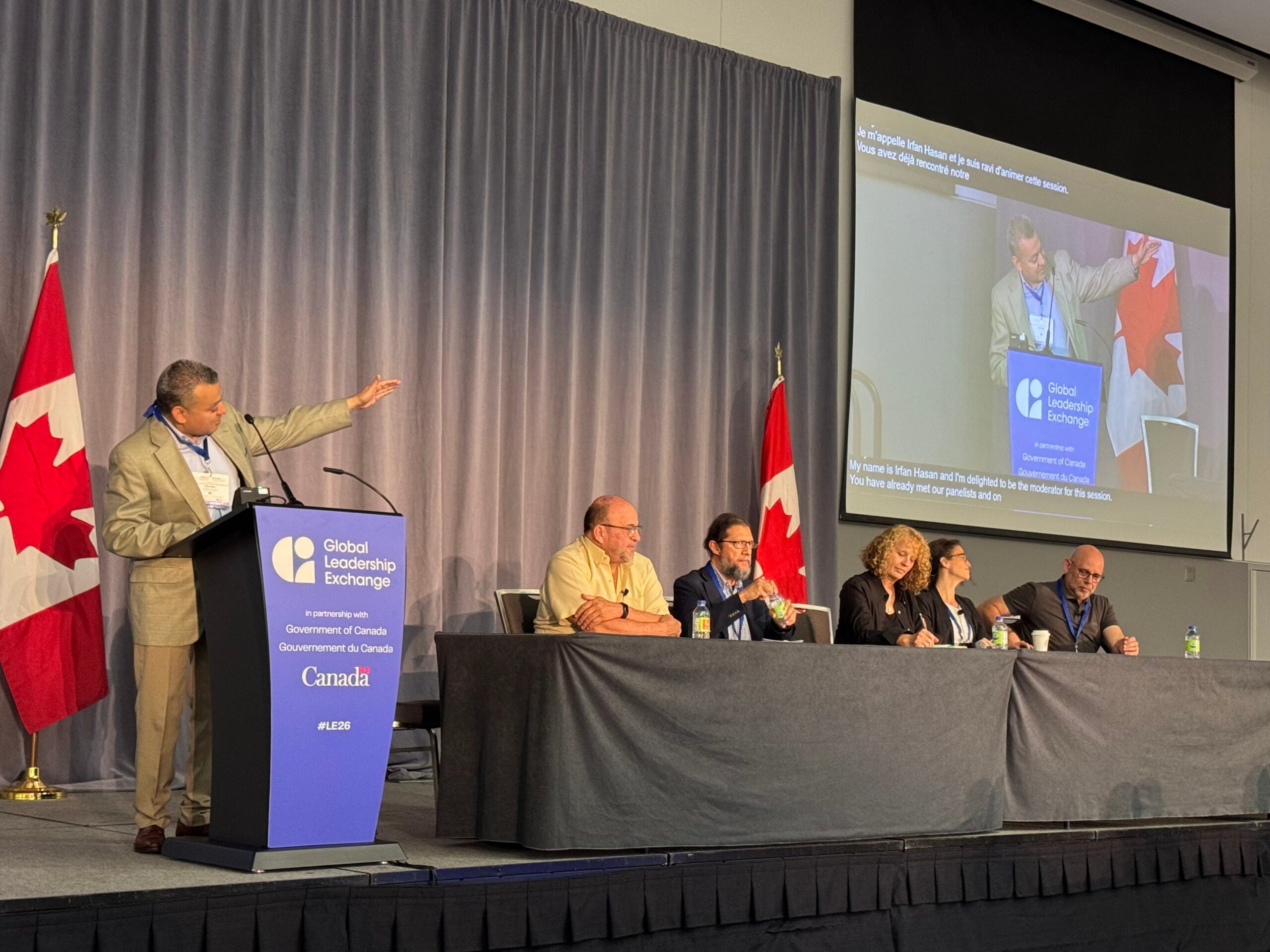
Conference panel including the foundation’s own Rick Ybarra.
Access is more than distance
One of the strongest themes in Halifax was that access to care in rural communities is not simply about geography. Yes, distance matters, but so does transportation, affordability, broadband access, childcare, privacy, trust, and whether the system is designed with rural realities in mind.
This may sound straightforward, but hearing it affirmed across countries made the need to address them feel more urgent. It reinforced for me that many of the challenges we are trying to address in rural Texas are not isolated problems. They are part of a broader global pattern. Just as importantly, it means we are not alone in looking for solutions.
Trust as “infrastructure”
Trust surfaced repeatedly. In rural communities, trust is not a side issue; it is essential infrastructure. Without a foundation of trust, people do not seek help, systems do not function well, and even well-designed services can fail to reach the people they were intended to support.
What was so compelling about these conversations was that they elevated relationship-based work as essential rather than secondary. Again and again, participants pointed to consistency, credibility, local relationships, and community connection as the conditions that make everything else possible. It was a strong reminder that what can sometimes be dismissed as “soft” work is, in reality, fundamental.
Community as both context and solution
The Halifax meeting also highlighted the tension between fragmented systems and the strength that exists within communities themselves. Participants talked openly about how difficult systems can be to navigate — technically available but practically inaccessible.
At the same time, they emphasized that communities are not just sites of need. They are also sites of resilience, belonging, and problem-solving. The strongest ideas throughout the meeting were not “top-down.” They were community-driven, contextual, and rooted in co-design.
This emphasis on community resonates deeply with me because it reflects a core truth we see so often: sustainable change rarely comes from imposing a model. Rather, it comes from building a model with people and trusting that communities hold expertise of their own.
Moving to Ottawa: The Broader Global Leadership Exchange
From Halifax, I traveled to Ottawa for the larger GLE conference, where more than 600 delegates came together to share their expertise on disability, mental health, substance use, and addiction issues. The scale of the conference was impressive, but what stayed with me most was the clarity of its values. There was a real throughline around knowledge to action, around collective solutions, and especially around the need to mobilize diverse forms of expertise, not as a symbolic gesture, but as a driver of better decisions.
The most important theme: lived experience as expertise
The most powerful and consistent message throughout the week was the intentional centering of lived and living experience. Not as a side conversation. Not as a single panel or occasional perspective. It was woven through the entire experience in ways that felt meaningful, visible, and structurally supported.
One of the clearest messages voiced during the exchange was that lived experience is not simply personal testimony; it is expertise. That distinction matters. It shifts lived experience from something systems politely acknowledge to something that must actively shape priorities, decisions, design, implementation, and evaluation.

Welcome to Ottawa.
From listening to power sharing
There was a line from one of the panelists that has stayed with me: “Listening is a courtesy. Sharing power is a commitment.” I keep coming back to this statement because it captures a tension many of us know well.
In the mental health and substance use fields, we often talk about listening, engagement, and inclusion. But the deeper question is whether those practices actually change anything. Are funding decisions being shaped differently? Are programs being redesigned? Are governance structures being altered? Are the people most affected being involved early enough to define the problem, not just responding to a nearly finished plan? Over and over, the conference challenged leaders to move beyond listening and into shared decision-making.
A striking contrast with 2019
One of the things that made this year’s conference feel especially important to me was the contrast to my experience at GLE 2019. At that time, lived experience representation felt limited and not intentionally integrated into the larger event. It was not centered in the way it was this year.
At GLE 2026, the difference was unmistakable. Lived and living experience was visible throughout the content, embedded in the framing, reflected in leadership voices, and treated as essential to the quality of the conversations. That shift matters. It signals growth in the field, but it also signals a deeper recognition that systems make better decisions when the people most affected are not just present, but influential. For me, seeing that evolution firsthand was both encouraging and inspirational.
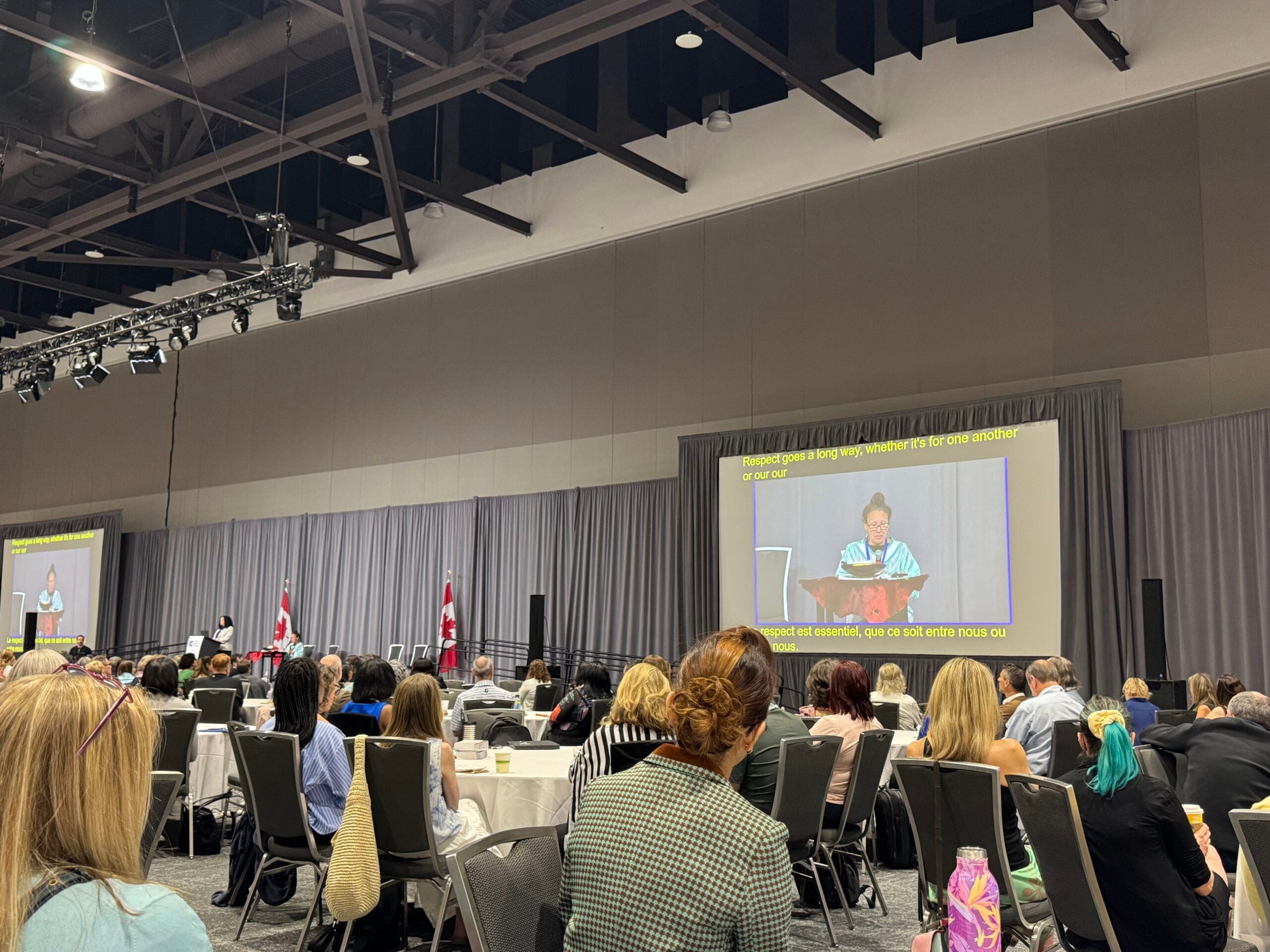
Conference attendees.
Intentional inclusion across the entire experience
What stood out to me was just how intentional the inclusion of lived experience felt across the week. The broader conference placed strong emphasis on lived experience from the standpoint of mental health, disability, and 2SLGBTQ+ (two spirit LGBTQ+) communities, and that framing showed up across sessions, panels, and discussions.
Representation was not abstract. It was visible and diverse. People of color, Indigenous leaders, youth, people with physical disabilities, and those with lived and living experience across multiple identities were present not just in attendance, but in leadership, facilitation, and decision-making spaces. That level of representation was palpable. It shaped the tone of conversations, deepened the dialogue, and made it clear that lived experience was not being treated as a single perspective, but as layered, intersectional, and essential to understanding systems in meaningful ways. It did not feel performative. It felt built in. That level of intentionality is something I continue to think about as I reflect on what meaningful inclusion looks like in our own work.
Why this matters for systems change
This focus on lived experience was not presented as a matter of politeness or optics. It was presented as essential to better decision-making and more inclusive and just outcomes. Several discussions made the point that diverse expertise only changes outcomes when it changes decisions. This means that lived experience must be involved in defining problems, shaping solutions, allocating resources, and evaluating outcomes.
The challenge offered to leaders was not just to “hear more voices,” but to ask harder questions: What decisions are we willing to share? What power are we actually moving? What has changed because people offered their expertise? That framing elevated the entire week.

The Citadel in Ottawa.
Accountability and the risk of exclusion
Another important theme was accountability. The conference pushed beyond the idea that participation alone is enough. If people repeatedly share their time, insight, and emotional labor but nothing changes, that is not meaningful engagement. It is extraction. That message was especially powerful because it named a pattern that many of us have seen: when systems are under pressure, the first voices to disappear are often the ones with the least institutional power.
People with lived experience, young people, and others working from the edges of formal systems are too often treated as optional when they should be treated as essential. The call in Ottawa was to build this work into structures such as governance, funding, hiring, evaluation, and decision-making, so it is not dependent on individual champions or temporary goodwill.
Why GLE 2026 Resonated for Me
Personally, my experience at GLE was both affirming and challenging. It affirmed that much of what we value at the Hogg Foundation, such as relationship-centered work, rural community engagement, trust-building, the importance of lived experience, and context-specific approaches, is aligned with broader international thinking. At the same time, it challenged me to think more concretely about how we continue moving from inclusion to co-production, from consultation to power sharing, and from promising ideas to accountable action. I left feeling energized but also sharpened. The week did not simply reinforce what I already believed; it expanded my sense of what is possible, what should be expected, and what responsibility comes with that.
Why my participation mattered
I also want to name clearly that participation in spaces like GLE matters for us at the Hogg Foundation. Being present was not only about professional development. It was about relationship-building, visibility, and exchange. It was about ensuring that the work happening in Texas, particularly around rural communities, peer support, and lived experience informed mental health leadership is part of the global conversation. It was also about bringing back new ideas, language, examples, and energy that can strengthen my/our own work. There is real value in being in the room when systems leaders, lived experience leaders, practitioners, and community voices from across many countries are grappling with the same questions we are.
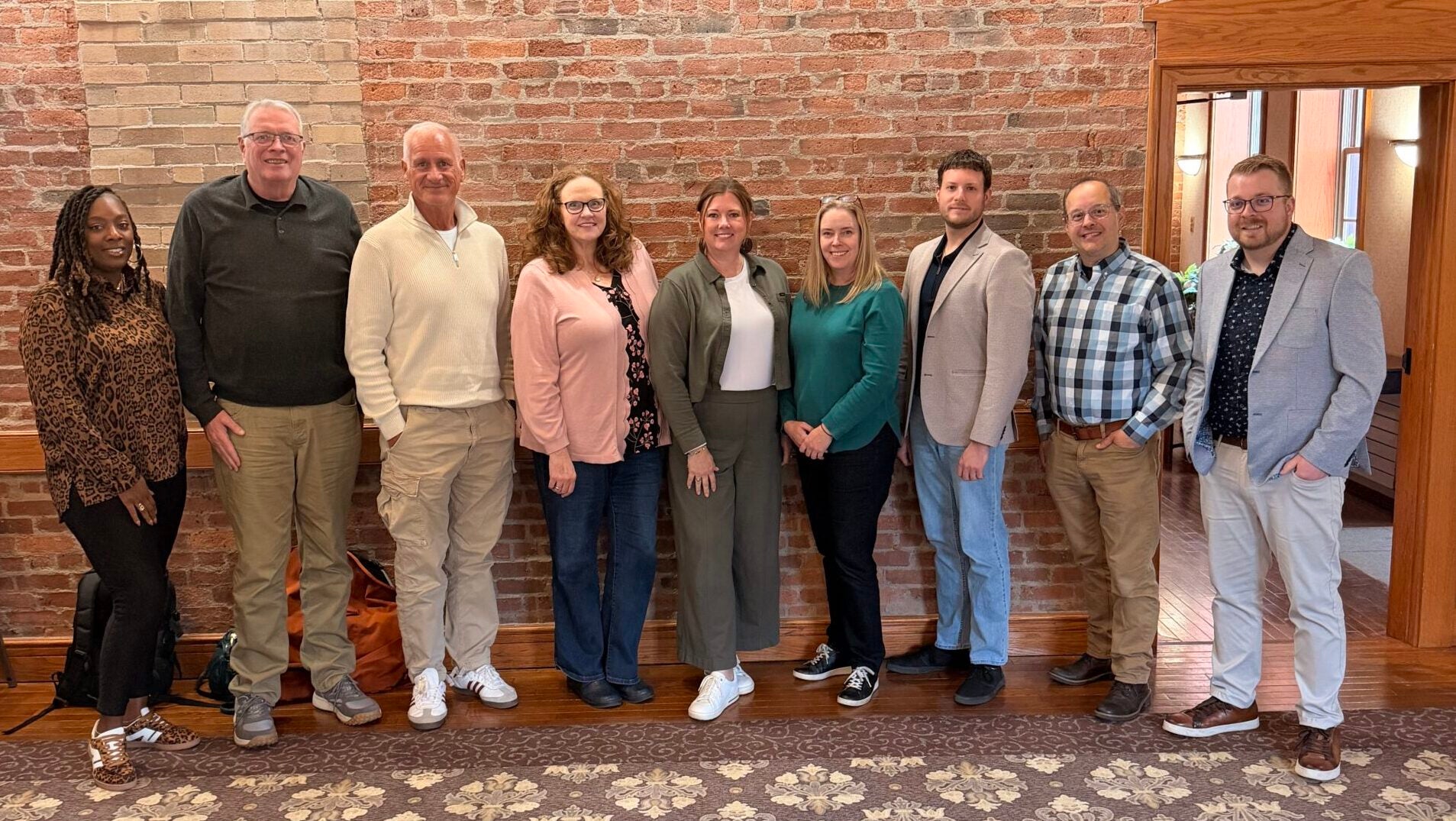
Tammy Heinz (fourth from left) and her small group.
Implications for the Hogg Foundation
For the foundation, this experience reinforces that our current direction: centering relationships, rural community contexts, and lived experience, is not only aligned with national priorities, but with a growing global movement. It also challenges us to keep pushing further. Specifically, it raises important questions about how we continue to move from inclusion to co-production in our work, how we embed lived experience more consistently into decision-making structures (not just engagement processes), and how we support community-driven approaches that are flexible enough to reflect local context while still achieving meaningful scale. It also highlights the value of our continued presence in these international spaces, not just to learn, but to contribute, connect, and ensure that Texas perspectives help shape the broader conversation.

A view through The Citadel.
Closing reflections
I came away from GLE 2026 deeply grateful for the opportunity to participate. The Halifax meeting grounded the week in the realities of rural and remote communities and reminded me that trust, access, and community are central to well-being. The full conference in Ottawa expanded that learning by making a strong and visible case for lived and living experience, shared accountability, and action-oriented leadership.
More than anything, I left with the sense that this work is moving forward, and that the Hogg Foundation is well positioned to continue contributing to that movement. I’m excited to keep reflecting on the implications for our work and to carry these insights forward with intention.
What I’m continuing to think about
- Rural well-being challenges are global, and solutions must stay local and rooted in relationships, trust, and community context rather than scaled versions of urban models.
- Access is about far more than distance; trust, infrastructure, affordability, and system design all shape whether care is truly reachable.
- “Listening is a courtesy. Sharing power is a commitment.” If our inclusion of lived experience is not leading to changes in decisions, priorities, or resource allocation, then it is not meaningful inclusion — it’s participation without impact and could be seen as tokenism.
- The shift from GLE 2019 to 2026 reinforces that intentionality matters. When lived experience is embedded throughout, it fundamentally changes the quality of the conversation and the potential for real change.
Related Content
Listening to Learn: Lessons from Communities of Care
As we move forward, the foundation will continue to show up in communities with the spirit of collaboration and listening to learn.
GLOW: Investing in Grantee Partner Capacity Through Reliable Flexible Funding
Find out more about how Greater Longview Optimal Wellness (GLOW) is revolutionizing access to health and wellness services in Longview.
Communities of Care Profiles
The Communities of Care initiative represents a transformative effort aimed at enhancing mental health and community resilience, particularly focused on children, youth, and families.