The Hogg Foundation is pleased to announce Jeeyeon Hong, a doctoral candidate in the School of Social Work at The University of Texas at Austin, is the 2026 recipient of the Moore Fellowship. Her dissertation is titled “Pilot Test of ‘Hope in Connection’: A Solution-Focused Group Therapy in an Alternative High School to Address the Youth Mental Health Crisis.” Her research will explore using Hope in Connection, a six-week group-based Solution-Focused Brief Therapy intervention designed to meet the needs of students with clinical mental health challenges, as a transdiagnostic early intervention model to target key protective factors related to depression, anxiety, and suicidal ideation such as social support, hope, coping, and resilience.
Since its establishment in 1995, the Harry E. and Bernice M. Moore Fellowship has been awarded to support doctoral students conducting research at UT Austin. Scholarships are awarded to students with a primary research interest in the human experience during crises, including natural or other major disasters or, more broadly, stress and adversity. Fellowship winners receive a one-time, unrestricted award of $20,000.
We spoke to Jeeyeon about her research:
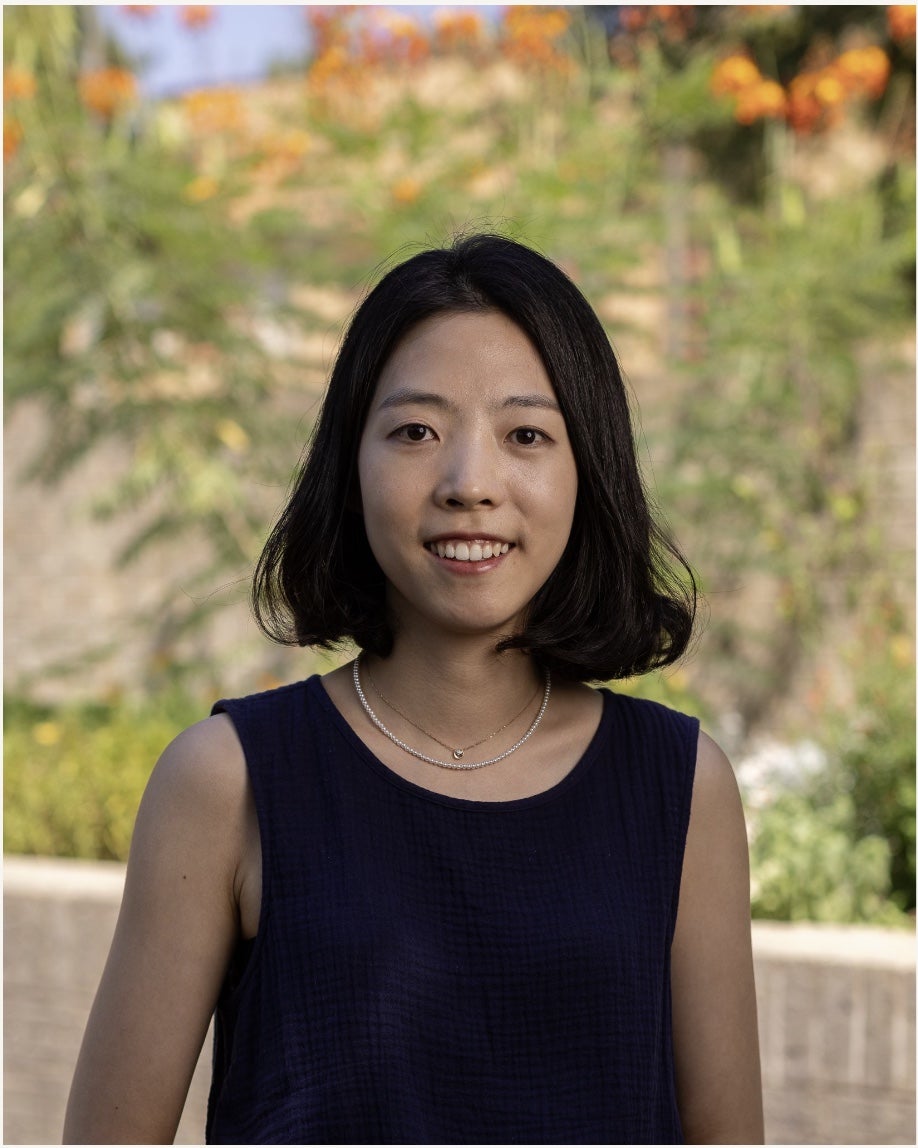
Tell us about yourself. At what point did you decide to pursue a career in mental health research, and what influenced that decision?
Before beginning my PhD program, I worked as a mental health clinician providing therapy to children and adolescents with mental health challenges and suicidal thoughts in community mental health settings. Through this work, I witnessed the power of a strengths-based approach, as adolescents became more engaged and opened up when conversations focused on their strengths rather than their problems. These experiences inspired me to pursue a PhD in Social Work to develop and evaluate strengths-based interventions that effectively support youth mental health.
Your dissertation is titled, “Pilot Test of ‘Hope in Connection’: A Solution-Focused Group Therapy in an Alternative High School to Address the Youth Mental Health Crisis.” What questions are you trying to answer with this work?
My dissertation focuses on developing and pilot-testing the “Hope in Connection” intervention, a six-week group-based Solution-Focused Brief Therapy (SFBT) program I designed to address depression, anxiety, and suicidal ideation among adolescents in an alternative high school setting. The intervention integrates SFBT with other established theories in mental health to strengthen key protective factors, including hope, social support, resilience, and positive peer connections throughout the six sessions.
My dissertation consists of two phases. In Phase 1, I conduct individual interviews with school counselors and teachers to gather feedback on the intervention’s feasibility/acceptability, implementation barriers and facilitators, and recommendations for refinement. In Phase 2, I conduct a mixed-methods pilot study to evaluate the feasibility, acceptability, and preliminary effectiveness of the finalized intervention among high school students.
My dissertation asks three primary questions. First, can Hope in Connection be implemented in a way that is feasible and acceptable for students and school stakeholders? Second, does the intervention show promise for improving key mental health outcomes (e.g., depression, anxiety, and suicidal ideation), and other protective factors among students? Third, how do students perceive the therapeutic process of change?
What gaps in the literature will be filled by your study? Who stands to benefit from it?
Despite growing interest in youth mental health, there are relatively few evidence-based interventions that are brief, strengths-based, and feasible to implement in schools. Moreover, most suicide prevention efforts focus primarily on identifying risk, with far less attention given to interventions that intentionally strengthen modifiable protective factors early on.
My dissertation addresses these gaps by extending the application of SFBT to clinical mental health outcomes, such as depression, anxiety, and suicidal ideation, as most previous SFBT research on youth has focused on general psychosocial outcomes. I view SFBT as particularly promising because of its strong theoretical alignment with hope, a well-established protective factor against mental health problems and suicide risk.
Lastly, while group therapy is the most common modality used in schools, very few structured intervention manuals are available to guide school practitioners. This study will produce practical implementation resources, including a facilitator guide, intervention manual, and training materials that schools can readily use.
How do you think your research methods and approach will help you to answer the questions that you’re posing?
I chose a mixed-methods research design because it allows me to understand not only whether the intervention works but also how students experience it and which aspects they find most helpful. Qualitative interviews with students and school staff will provide valuable insights into implementation and refinement strategies. Another key feature of the study is its community-engaged research approach. I believe this collaborative approach will increase the intervention’s contextual fit, stakeholder buy-in, and long-term sustainability in real-world practice.
Are there any suggested readings you can recommend for those who might be interested in learning more about this topic?
- Franklin, C., Streeter, C. L., Webb, L., & Guz, S. (2018). Solution-focused brief therapy in alternative schools: ensuring student success and preventing dropout. Routledge
- Fiske, H. (2008). Hope in action: Solution-focused conversations about suicide. Routledge.
- Jerome, L., Masood, S., Henden, J., Bird, V., & Ougrin, D. (2024). Solution-focused approaches for treating self-injurious thoughts and behaviours: A scoping review. BMC Psychiatry, 24(1), 646. https://doi.org/10.1186/s12888-024-06101-7
Related Content

2026 Moore Fellowship Recipient: Abdulla Al Kafy
The Hogg Foundation is pleased to announce Abdulla Al Kafy, a doctoral candidate in the Department of Geography and the Environment at The University of Texas at Austin (UT Austin), as the 2026 recipient of the Moore Fellowship.
2024 Moore Fellowship Recipient: Catherine Wilsnack
Catherine Wilsnack’s study will help characterize how a cancer survivors may experience an increased risk of substance use throughout the cancer continuum.
2023 Moore Fellowship Recipient: Xiao Ding
Xiao Ding’s study will provide insight into the development of high school-based crisis intervention programs.