
This blog post was authored by Rick Ybarra, senior program officer of the Hogg Foundation.
From time to time, we come across powerful stories of transformation that positively impact real people, real lives, and real communities. This is one such story—an example of how one rural library, operating with heart and passion, is making a tangible difference in a small rural border community by prioritizing people and harnessing existing community assets.
San Elizario is a city in El Paso County, Texas. Incorporated on November 5, 2013, its estimated population (as of July 1, 2020) is 10,093. Located along the Rio Grande, which forms the border between the United States and Mexico, the city spans 6.885 square miles and is part of the El Paso metropolitan area.
According to the 2020 Census, 97.8 percent of the population is Hispanic or Latino, and 95 percent speak a language other than English (primarily Spanish). Over a third of the community lacks health insurance, and a similar proportion lives in poverty.
The Pete Herrera Library, located at 12496 Socorro Road, serves as a beacon of hope in this historically underserved and under-resourced community. Renamed in honor of Deputy Sheriff Peter Herrera who was killed during a traffic stop in 2019, the rural library has become a trusted space for education, information, and support.
Over the years, the library has developed into a “go-to” hub for services and programs, including legal and immigration services, tax preparation, general literacy and health classes, exercise and nutrition classes, health fairs, and mental health support. From organizing school backpack drives to distributing free COVID-19 test kits, the library strives to meet the community’s diverse needs.
Through partnerships with organizations like Project Vida Health Center, Texas Tech University at El Paso, the University of Texas at El Paso (UTEP), and Emergence (Local Mental Health Authority or LMHA)), the library offers a wide range of services. These include mental health education, counseling, and outreach by community health workers (CHWs). The library is staffed by dedicated volunteers, led by Maria Ortiz Covernali, and has become a vital lifeline for residents, especially in the aftermath of the COVID-19 pandemic.
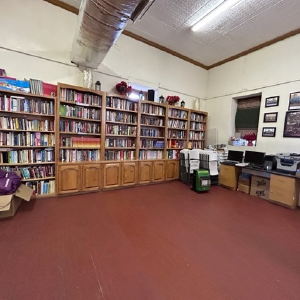
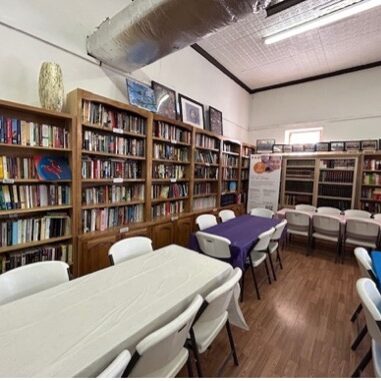
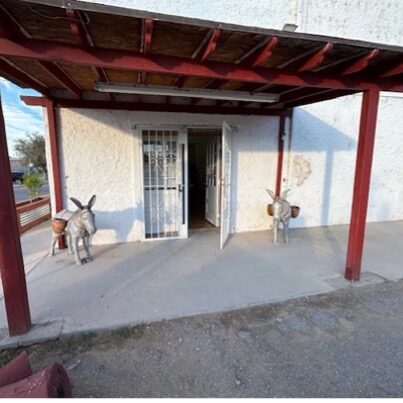
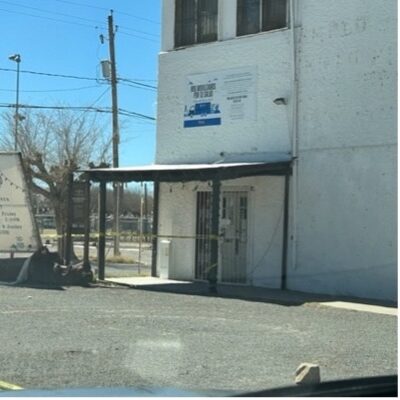
Above: “Before” and “after” images of the exterior (top row) and interior (bottom row) of the Pete Herrera Library.
Many residents of San Elizario lack access to affordable healthcare. The library bridges this gap by coordinating and delivering education, testing, and health services in a setting that is accessible and familiar to the community. As a result, the library has evolved into a true community resource center—a trusted access point for programs and services that improve the well-being of San Elizario’s residents.
Some of its ongoing initiatives include:
- Weekly mental health meetings for youth, with an average attendance of 30 participants.
- Parent sessions on depression, anxiety, and general mental health education.
- A partnership with UTEP’s School of Social Work to certify local residents as CHWs, including mental health certifications like Mental Health First Aid.
In 2023, the Hogg Foundation awarded a $40,000 grant to the Pete Herrera Library to modernize its resources and expand its programs. This modest investment has had a profound impact:
- The library saw a dramatic increase in foot traffic, from an average of 50 visitors per week in March 2023 to 200 per week in October 2024.
- It continues to offer diverse programming, such as adult education, computer literacy, and art classes.
- UTEP psychologists provide weekly counseling in newly renovated private spaces.
- Aetna provides COVID-19 and flu vaccines to 150-200 people weekly.
- The mobile health clinic is scheduled to resume services in January 2025.
The Pete Herrera Library is a shining example of how a small, rural library can transform into a resource hub that addresses the physical, mental, and social needs of its community. With its dedicated team and partners, it continues to make a lasting difference.
The Hogg Foundation is proud to support this work, but it’s important to note: real change isn’t just about funding. It’s about people—their dedication, passion, and resilience. The Pete Herrera Library exemplifies this truth and serves as an inspiration to us all.
Related Content
Young Minds Matter: Historical and Cultural Trauma
Historical and cultural trauma are lasting legacies of oppression identified by young adults in underserved communities as substantial threats to their mental health.
Agenda | 2019 Young Minds Matter
Agenda | Young Minds Matter: Communities Connecting for Well-being This year’s Young Minds Matter conference is taking place on October 23, 2019 at the Hilton Galleria Area in Houston, TX. Learn more about the event. 8:00 – 9:00 AM Check In and...
Agenda | 2019 Young Minds Matter
Agenda | Young Minds Matter: Communities Connecting for Well-being This year’s Young Minds Matter conference is taking place on October 23, 2019 at the Hilton Galleria Area in Houston, TX. Learn more about the event. 8:00 – 9:00 AM Check In and...
Agenda | 2019 Young Minds Matter
Agenda | Young Minds Matter: Communities Connecting for Well-being This year’s Young Minds Matter conference is taking place on October 23, 2019 at the Hilton Galleria Area in Houston, TX. Learn more about the event. 8:00 – 9:00 AM Check In and...
Agenda | 2019 Young Minds Matter
Agenda | Young Minds Matter: Communities Connecting for Well-being This year’s Young Minds Matter conference is taking place on October 23, 2019 at the Hilton Galleria Area in Houston, TX. Learn more about the event. 8:00 – 9:00 AM Check In and...
Agenda | 2019 Young Minds Matter
Agenda | Young Minds Matter: Communities Connecting for Well-beingThis year’s Young Minds Matter conference is taking place on October 23, 2019 at the Hilton Galleria Area in Houston, TX. Learn more about the event. 8:00 – 9:00 AM Check In and Breakfast...